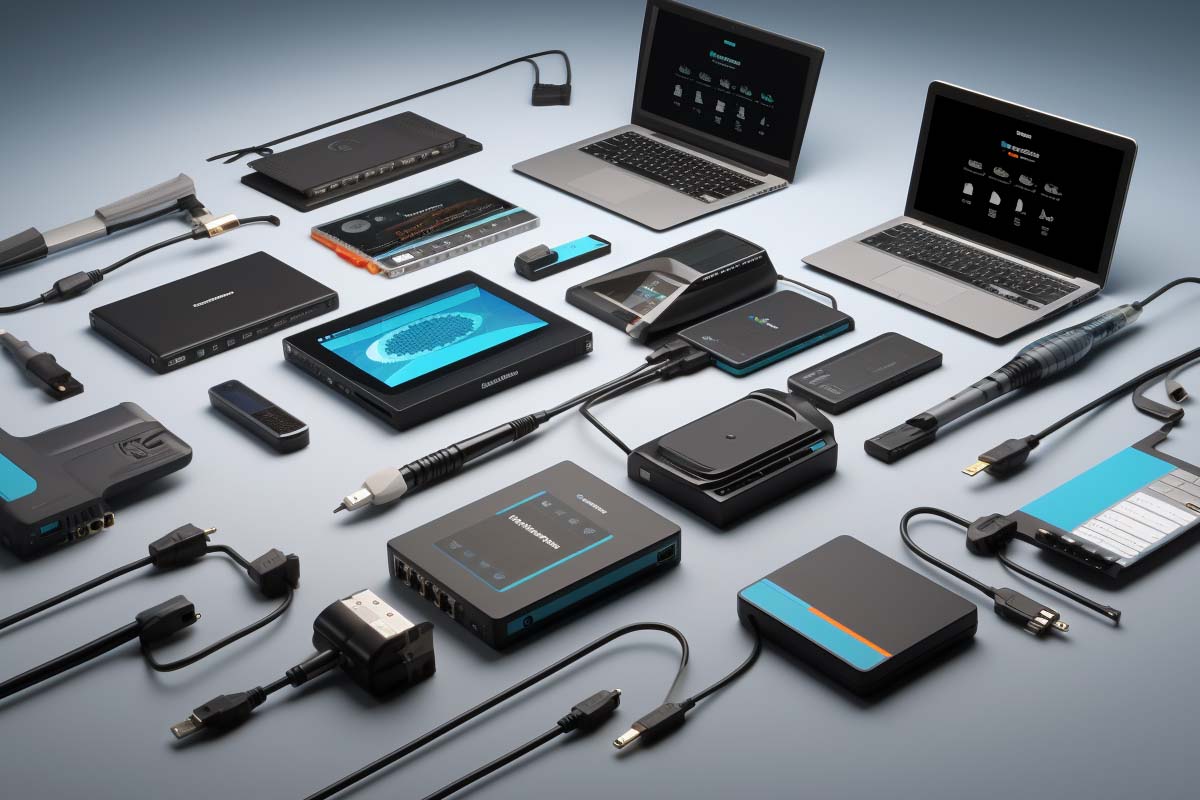
When a keyboard stops typing, a printer vanishes, or a monitor goes black, the problem is often not the peripheral itself. The real fault is usually in the connection path, the driver, the power source, the dock, or an operating system setting that is blocking normal communication.
CompTIA Cloud+ (CV0-004)
Learn practical cloud management skills to restore services, secure environments, and troubleshoot issues effectively in real-world cloud operations.
Get this course on Udemy at the lowest price →Quick Answer
To troubleshoot computer hardware problems involving peripheral failures, isolate the device from the connection path, software, and power source before replacing anything. The fastest method is to test power, swap cables or ports, check drivers and device status, then verify the peripheral on another computer. That process prevents wasted time and avoids replacing a working keyboard, mouse, printer, or monitor.
Quick Procedure
- Check power and basic device status first.
- Inspect cables, ports, adapters, and docks.
- Test the peripheral on another port or computer.
- Review operating system device status and drivers.
- Re-pair wireless and Bluetooth devices if needed.
- Test printers, monitors, and hubs by bypassing the dock.
- Replace the device only after every other layer is ruled out.
| Primary Topic | Computer terminal and other computer peripheral equipment manufacturing troubleshooting |
|---|---|
| Main Goal | Isolate whether the fault is in the device, connection path, power, or software environment |
| Best First Test | Swap cables, ports, or computers before replacing hardware |
| Common Failure Types | No response, intermittent disconnects, degraded performance, or compatibility issues |
| Most Affected Devices | Keyboards, mice, printers, monitors, docks, Bluetooth devices, and external drives |
| Troubleshooting Method | Layered isolation using power, path, driver, and software checks |
| Related Skills | Desktop support, CompTIA A+ style isolation, and practical cloud troubleshooting concepts from CompTIA Cloud+ (CV0-004) |
Introduction
If you are troubleshooting computer terminal and other computer peripheral equipment manufacturing issues in the field, the mistake that costs the most time is assuming the device is dead. In many cases, the keyboard, mouse, printer, monitor, or dock is only the symptom, not the root cause.
This is a layered problem. A peripheral can fail because of the device itself, a weak cable, a bad port, a corrupted driver, a missing power source, or an operating system setting that blocks detection. The same “dead device” symptom can mean three different things depending on whether you are dealing with USB, Bluetooth, wired, wireless, or dock-connected hardware.
The practical answer is to troubleshoot in layers and isolate one variable at a time. That is the same isolation mindset used in CompTIA A+ style desktop support, and it matches the kind of practical service recovery thinking covered in CompTIA Cloud+ (CV0-004) when you need to restore service quickly without guessing.
Most peripheral failures are not hardware failures until you prove every other layer is healthy.
For a broader definition, Peripheral simply means an external device that extends input, output, storage, or communication on a computer. That definition matters because the problem may be in the device, but it is just as often in the path between the device and the operating system.
Note
The phrase “peripheral meaning in computer” usually refers to any external input or output device, including printers, monitors, scanners, mice, keyboards, and docks. In support work, that means you should treat the issue as a system problem first, not a single-device problem.
What Peripheral Failures Actually Mean
Peripheral failure is not a single event. It is a catch-all description for a device that does not respond as expected, but the actual root cause may be physical, electrical, or software-related. That is why one user says “my mouse is broken” while the real issue turns out to be a dead battery, and another says “the printer is bad” when the spooler is stuck.
The fastest way to think about peripheral failures is to divide them into three failure points: the device, the connection path, and the software environment. The device includes the keyboard, mouse, printer, monitor, headset, or external drive. The connection path includes cables, ports, hubs, adapters, Bluetooth radios, and docks. The software environment includes drivers, firmware, OS settings, service processes, and device policies.
Why the same symptom can mean different things
A keyboard that types nothing may have a dead battery, a bad USB port, a disabled device in Device Manager, or a failed controller on the motherboard. A printer that shows online may still be blocked by a frozen queue. A monitor that says “No Signal” may be fine, while the graphics adapter, dock, or cable has failed instead.
The phrase “all peripherals stopped working” often points away from the devices and toward a shared dependency like a dock, hub, power strip, or USB controller. If multiple devices fail at once, the probability shifts quickly toward a path failure rather than individual hardware defects.
That is also where the old Britannica-style idea of a “computer expansion card” becomes relevant in plain language: a peripheral may rely on an expansion path such as a graphics adapter, USB controller, or network interface, and a fault there can look like a peripheral problem even when the endpoint device is healthy.
Official driver and device guidance from Microsoft Learn is a useful reference when you need to distinguish device failure from OS detection problems. The same general isolation model is reinforced in CISA incident response guidance: identify the affected layer before making changes.
What Are the Most Common Peripheral Failure Symptoms?
Common troubleshooting issues with peripherals usually fall into four symptom patterns: complete non-response, intermittent disconnects, degraded performance, and compatibility problems. Each pattern points you toward a different part of the stack, which is why symptom recognition saves so much time.
Complete non-response
Complete non-response is the easiest symptom to describe and the easiest to misread. The device appears dead: no input, no output, no detection in the operating system, or no status light at all. That does not prove the peripheral is defective, because the problem may be power, pairing, port failure, or a blocked driver.
Intermittent behavior
Intermittent behavior is often more useful than a full outage because it gives you clues. A device that disconnects and reconnects, works only after a reboot, or drops out when touched usually points to cable wear, loose connectors, unstable power, interference, or a failing dock. Wireless devices that “wake up” after several seconds often have battery or radio problems rather than permanent hardware damage.
Degraded performance
Degraded performance is the classic “it works, but badly” case. Examples include laggy mouse movement, delayed keystrokes, audio stutter, slow print jobs, poor print quality, or a display that flickers during high resolution output. These symptoms can be caused by driver mismatches, poor signal quality, low power delivery, or hardware running beyond its supported capability.
The key is pattern recognition. A laggy mouse and a failing USB headset suggest a shared connection or power issue. A printer with excellent hardware but delayed jobs points to a queue, spooler, or network issue. A monitor that flashes only on one dock points at the dock first, not the panel.
For workforce and support context, the U.S. Bureau of Labor Statistics Occupational Outlook Handbook continues to show steady demand for support roles that require diagnostic thinking, not just parts replacement. That is exactly why peripheral troubleshooting remains a core desktop skill.
How Do You Start With the Fastest Checks First?
Start with the fastest checks first because simple issues cause a large share of peripheral failures and they can be confirmed in under a minute. A battery, loose cable, accidental mute, disabled function key, or offline printer queue can look serious when the fix is trivial.
-
Check power first. Verify that the device is switched on, charged, plugged in, or receiving power through USB. Wireless keyboards, mice, headsets, and portable drives often fail because of weak batteries or a dead charging cable, not because the device itself is broken.
-
Inspect the physical connection. Re-seat USB plugs, remove and reconnect adapters, and check for bent pins or damaged cable jackets. A connector that looks “almost in” can still pass power while failing data transmission.
-
Test another port. Use a different USB port, display input, or dock port to see if the issue follows the device or stays with the connection point. If the peripheral works elsewhere, the problem is probably the original port, hub, or cable.
-
Check obvious software toggles. Look for mute buttons, airplane mode, disabled Bluetooth, printer offline mode, or function-lock settings. A user may think the hardware failed when the operating system or a physical toggle has simply turned the feature off.
-
Confirm on another computer. If the device works on a second system, you have narrowed the fault to the original machine. This is one of the fastest ways to separate device failure from system failure.
This is the same isolation logic used in support centers and field service teams. It prevents the common mistake of replacing a keyboard or monitor when the real issue is a $10 cable or a disabled device setting.
Pro Tip
If a user reports that “why is my xp pen not connecting,” treat it like any other peripheral issue: check power, cable type, driver status, and whether the tablet works on another USB port or machine before assuming tablet failure.
How Do You Diagnose Driver and Software Problems?
Drivers are the software layer that lets the operating system communicate with a specific peripheral. When drivers are missing, corrupted, outdated, or incompatible, the device can appear broken even though the hardware is physically fine.
This is especially common with printers, monitors, webcams, audio devices, graphics adapters, and docking stations. A driver mismatch may cause no detection, poor performance, wrong resolution, missing audio, or a device that appears briefly and then drops out.
What to check in the operating system
Look at Device Manager on Windows, printer status tools, Bluetooth settings, or the relevant device console. If a device shows a warning icon, an unknown device, or repeated reconnect events, do not jump straight to replacement. You need to know whether the OS recognizes the peripheral and whether the issue is at the driver layer.
Use standard recovery actions in order: update the driver, roll it back if the issue started after a change, remove the device and let the OS rediscover it, then reinstall the vendor package if needed. For printers and docks, vendor-specific management tools often provide more accurate status than the default OS screen.
Microsoft’s official troubleshooting and device documentation at Microsoft Learn is the best starting point for Windows device behavior. For broader endpoint compatibility and configuration thinking, the Cisco support model for networked endpoints is also a useful reference when a peripheral depends on stable networking or infrastructure.
Remember that driver problems often show up right after a major OS update, a firmware change, or a device move from one dock to another. If the device was working yesterday and failed today, start with recent software changes before replacing hardware.
Which Ports, Cables, and Connection Paths Should You Check?
The connection path is everything between the peripheral and the computer, including ports, cables, adapters, splitters, extension cords, hubs, and front-panel connectors. A healthy peripheral cannot work if the path fails to carry power or data reliably.
USB ports are a frequent trouble spot because one port can supply enough power for a light indicator while still failing to pass data. That makes the device look alive even though the host cannot communicate with it. The same thing happens with damaged HDMI, DisplayPort, or USB-C connections: the device powers on, but the signal never reaches the destination.
- Swap the cable. Use a known-good cable with the correct type and quality rating.
- Move to another port. Test rear ports, not just front-panel ports, because front connectors are often more fragile.
- Remove the adapter. If a USB-C to HDMI adapter or older dongle is involved, bypass it temporarily.
- Bypass splitters and hubs. Connect the peripheral directly to the computer when possible.
- Check for damage. Look for bent connector shells, frayed cables, loose fits, or intermittent movement failures.
If multiple peripherals fail through the same hub, dock, or port chain, the path is probably the issue. That is where computer terminal and other computer peripheral equipment manufacturing support teams spend a lot of time: not on the device body itself, but on the interfaces and support hardware that connect it to the system.
For hardware standards and cable behavior, vendor documentation from USB-IF and device guidance from Dell Support can be especially useful when a dock, adapter, or port behaves inconsistently. If a port passes power but not data, the physical connector may still need replacement even though the peripheral is fine.
How Should You Inspect Power, Batteries, and Charging Issues?
Power problems are one of the most overlooked causes of peripheral failures because the device may still show signs of life. A wireless mouse may move for a few minutes, then lag. A headset may connect, then cut out. A portable drive may spin up, then disconnect under load.
Battery-powered peripherals fail differently from wall-powered ones. Low batteries often create random disconnects, delayed response, pairing drops, or unstable performance that users mistake for “bad hardware.” Wired devices can also suffer from weak power delivery through USB hubs, bus-powered docking stations, or low-quality charging cables.
What to test
Check the battery compartment, charging cable, and power source. Replace batteries with known-good ones. Try a different wall adapter, different USB port, or a direct connection to the computer rather than a hub. If the device needs external power, verify the adapter output matches the device requirements.
AC adapters, power strips, and surge protectors are hidden failure points. A peripheral may seem broken when the real problem is a switched-off strip, a loose barrel connector, or insufficient power from a dock that is already feeding multiple attached devices. Bus-powered devices are particularly sensitive because they depend entirely on the host for electrical stability.
If you are troubleshooting a laptop setup and the dock is sharing power across keyboard, mouse, display, and network hardware, power budgeting matters. A weak dock can make several peripherals look faulty at the same time, which is why “all peripherals stopped working” should trigger a dock and power review immediately.
The practical habit is simple: always test with a known-good power source before making a replacement decision. That one step saves both time and money.
How Do You Troubleshoot Wireless, Bluetooth, and Dongle-Based Devices?
Wireless peripherals fail for three common reasons: pairing problems, interference, and low-quality radio paths. That is why a wireless mouse, Bluetooth keyboard, or USB receiver headset can behave like a bad device even when the hardware is still functioning.
Bluetooth devices are especially prone to pairing corruption after OS updates, adapter changes, or dock swaps. If the device used to work and suddenly does not, remove the pairing, restart Bluetooth, and re-pair from scratch. If the computer has an outdated Bluetooth adapter or a weak integrated radio, the peripheral may be fine while the host connection remains unstable.
Practical checks for wireless failures
- Replace the batteries. Weak batteries are the easiest miss in wireless troubleshooting.
- Move closer. Test within a few feet of the computer to rule out signal range issues.
- Reduce interference. Keep USB 3.0 devices, metal obstructions, microwaves, and crowded cable areas away from the radio path.
- Re-pair the device. Remove it from Bluetooth settings and pair again.
- Test the dongle. For non-Bluetooth devices, move the USB receiver to another port or use a short USB extension to improve line of sight.
Many users search “why is my xp pen not connecting” because the tablet is fine but the wireless or driver layer is not. The same pattern applies to mice, styluses, and headsets. The symptom looks like hardware failure, but the root cause is often radio interference, a broken pairing record, or an adapter issue.
For Bluetooth behavior, official guidance from Bluetooth SIG is useful for understanding pairing and device compatibility expectations. If the connection only fails when the peripheral is plugged into a dock, the dock becomes the suspect before the device does.
How Do You Resolve Printer Failures and Queue Problems?
Printer failures are often software and queue problems disguised as hardware faults. A printer can appear online, accept a job, and still never print because the spooler is stuck, the queue is frozen, or the driver is mismatched to the device model.
Start by checking the print queue. Look for paused jobs, error states, or a queue that keeps rebuilding the same job. Confirm the default printer is correct, because users often print to the wrong device after a dock change or office move. Network printers add another layer: the printer may have a new IP address, a lost network path, or a discovery issue on the workstation.
Order matters with printers
Check the queue and driver before touching paper, toner, or ink. If the operating system cannot communicate properly, replacing consumables will not help. If the printer is networked, verify connectivity from another computer or ping the printer’s IP address if policy allows it.
Only after the software and connection look healthy should you inspect trays, media paths, cartridges, and firmware. That sequence matters because many printers are replaced or opened for maintenance when the true issue is simply a blocked spooler service or a bad driver package.
For official print architecture and device management guidance, Microsoft Support is useful in Windows environments, while HP Support and other vendor support sites help confirm model-specific queue and firmware behavior.
How Do You Fix Monitor and Display Adapter Problems?
Display problems are not always monitor failures. A blank screen, black panel, or “No Signal” message can be caused by the graphics adapter, cable, input source, dock, refresh rate, or resolution settings rather than the monitor itself.
Start with the basics. Confirm the monitor has power and the correct input selected. Then check HDMI, DisplayPort, or USB-C connections for looseness or damage. If the display is attached through a dock, bypass the dock and connect directly to the laptop or desktop to see whether the signal returns.
Compatibility and configuration problems
Display settings can break a working monitor. A resolution or refresh rate outside the monitor’s support range can make the screen appear dead even though the panel is healthy. Multi-display setups can also fail when the primary display route changes after a driver update or dock reconnect.
Try another cable, another input source, or another computer. If the monitor works with a different machine, the fault sits in the original computer, dock, or graphics path. If multiple monitors fail together on the same dock, the dock or graphics output path is the first thing to suspect.
The NVIDIA and AMD support pages are useful when the issue involves GPU output modes or display compatibility. In the field, the rule remains the same: isolate the signal path before you blame the panel.
How Do You Troubleshoot Docks, Hubs, and Expansion Devices?
Docking stations and hubs are common single points of failure because they sit in the middle of power, display, network, and USB communication. If a dock fails, it can take down a keyboard, mouse, monitor, Ethernet connection, and storage device at once.
This is why dock-related incidents often show up as “all peripherals stopped working.” The dock may have a firmware issue, an insufficient power budget, overheating, a driver conflict, or a loose upstream cable. A laptop that works perfectly when undocked but fails when connected through the dock is telling you exactly where to look.
- Bypass the dock. Connect one peripheral directly to the computer.
- Test the upstream cable. Replace the cable that connects the dock to the host device.
- Check power delivery. Confirm the dock is using the correct adapter and wattage.
- Update firmware. Many docks need firmware updates to stabilize display and USB behavior.
- Watch for heat. Overheating can create intermittent failures that look random.
The practical test is simple: if the problem disappears when the dock is removed, the dock is the cause or part of the cause. If the problem remains with direct connections, look downstream at the device, cable, or system. This kind of structured thinking is exactly what support teams use to avoid replacing the wrong part.
For peripheral and dock architecture, vendor documentation from Lenovo Support and HP Support can help confirm compatibility and firmware requirements for specific models.
What Is the Best Structured Troubleshooting Method?
A structured troubleshooting method is the only reliable way to diagnose peripheral failures quickly without making assumptions. It keeps you from chasing random fixes and helps you prove where the failure actually lives.
-
Record the symptom. Note whether the device is completely dead, intermittently failing, or degraded. Also record whether one device or several devices failed together, because that distinction changes the likely root cause.
-
Identify recent changes. Ask about updates, new docks, moved cables, changed ports, driver installs, firmware updates, power outages, or user profile changes. The cause is often the last thing that changed.
-
Isolate one variable at a time. Swap one cable, one port, one account, or one machine at a time. Do not change three things at once, or you will not know what actually fixed the issue.
-
Test across another system. A different user account, another port, or a second computer can separate device problems from OS or profile problems. This is the fastest proof when you are uncertain whether the peripheral is really at fault.
-
Document every step. Write down what you tested and what changed. That record makes repeat incidents faster to solve and helps other technicians avoid duplicating work.
This method is valuable beyond desktops. Cloud and endpoint support teams use the same discipline because a service that “looks broken” is often failing in one layer while another layer is fine. That same logic is why CompTIA Cloud+ (CV0-004) emphasizes restoring service through practical diagnosis, not guesswork.
CompTIA supports the kind of baseline support thinking that makes this process repeatable: isolate, verify, and only then remediate.
How Do You Prevent Repeat Peripheral Failures?
Prevention is mostly about reducing avoidable variation. If the same peripherals keep failing, the cause is often bad cabling, weak power, inconsistent drivers, poor docking hardware, or sloppy change management.
Keep drivers, firmware, and operating systems updated, but do it in a controlled way. Random updates across mixed hardware can create more problems than they solve. Use approved docks, quality cables, and known-good power sources so the support environment stays predictable.
Simple prevention habits that work
- Label ports and cables. This makes known-good configurations easier to recreate.
- Track replacements. If the same device fails repeatedly, log the dates and symptoms.
- Inspect wear points. Look at connectors, strain relief, and cable bends during routine checks.
- Clean ports carefully. Dust and debris can interfere with fit and signal quality.
- Monitor battery health. Replace weak batteries before they start causing intermittent behavior.
A controlled support process is more valuable than improvisation. If your team knows which dock, cable, port, driver package, and power setup are stable, you can restore a failed workstation much faster and avoid repeating the same incident.
For broader workplace support and service process context, SHRM and support operations guidance from the ITIL community both reinforce the same principle: standardize the environment, then troubleshoot exceptions.
When Should You Replace the Device or Escalate the Issue?
Replace the device only after the evidence shows that the peripheral itself is the failure point. If the device fails on multiple ports, on multiple computers, and with known-good cables or power, replacement becomes reasonable. If it works everywhere except one workstation, the problem is not the device.
Escalate the issue when multiple peripherals fail together, when a whole port bank goes dead, or when the motherboard, USB controller, graphics path, or dock firmware appears to be involved. Shared failure patterns usually mean the defect sits higher in the stack than the individual peripheral.
Sometimes repair is the smarter move, especially when the hardware is expensive or still under warranty. Other times replacement is faster and cheaper because downtime costs more than the device. The right decision depends on age, warranty status, support contract coverage, and how much business interruption the failure creates.
Warning
Do not replace a peripheral just because it is the last thing you touched. Prove the device is the problem with isolation tests, or you may spend money fixing the wrong layer.
If the issue persists after direct connection testing, driver verification, and power checks, the remaining suspects are usually the host system or a failing internal controller. At that point, escalation is the right call, not another round of guessing.
How Do You Verify It Worked?
Verification means proving the peripheral is stable, not just briefly responsive. A device that works for 30 seconds and then drops again is still not fixed.
Use concrete success indicators. A keyboard should register repeated input without delay. A mouse should track smoothly across the full screen. A printer should clear the queue and complete a print job. A monitor should wake consistently and maintain the correct resolution and refresh rate. A wireless device should stay paired after a reboot and after the user walks away and returns.
- Confirm detection. The operating system should recognize the device without warning icons or unknown-device status.
- Test normal usage. Type, print, click, move, stream, or display content the way the user actually works.
- Reboot and retest. Persistent functionality after restart is a stronger indicator than a single successful test.
- Check with the original user. Users often spot subtle failures, such as lag, noise, or intermittent disconnects, that a quick test misses.
If the device fails verification after the fix, go back one layer and retest the connection path, power source, or driver state. Good troubleshooting is not about speed alone. It is about proving the system is stable before you close the ticket.
Key Takeaway
Peripheral failures are usually caused by a cable, port, driver, power source, dock, or OS setting before they are caused by the device itself.
Isolate one layer at a time, and always test with a known-good alternate port, cable, or computer.
Wireless, Bluetooth, printer, and monitor issues often look like hardware failure but are really connection or software problems.
If multiple peripherals fail at once, suspect the dock, hub, power path, or host controller before replacing each device.
CompTIA Cloud+ (CV0-004)
Learn practical cloud management skills to restore services, secure environments, and troubleshoot issues effectively in real-world cloud operations.
Get this course on Udemy at the lowest price →Conclusion
The fastest way to troubleshoot computer hardware problems involving peripheral failures is to stop thinking in terms of one bad device and start thinking in terms of layers. Power, cables, ports, drivers, OS settings, wireless pairing, and docks all sit between the user and the hardware, and any one of them can make a healthy peripheral look dead.
That is why the best technicians check the simplest causes first, isolate one variable at a time, and verify the result before moving on. The same process works for keyboards, mice, printers, monitors, Bluetooth devices, dongle-based peripherals, and external drives.
If you want to build stronger troubleshooting habits, use this method on every ticket: identify the symptom, test the path, confirm the software layer, verify on another machine, and replace hardware only when the evidence is clear. That approach saves time, reduces unnecessary replacements, and gets users back to work faster.
CompTIA® and CompTIA Cloud+ (CV0-004) are trademarks of CompTIA, Inc.
