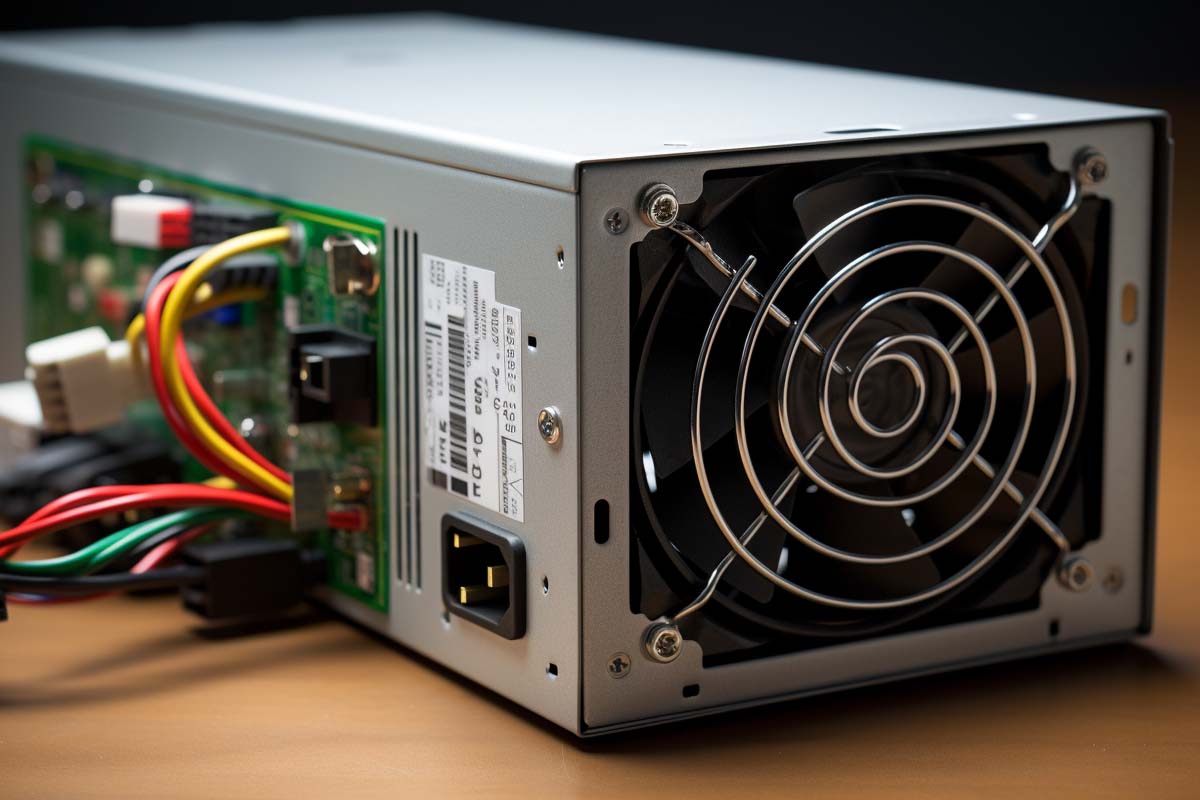
A broken pc setup that randomly shuts off, refuses to boot, or crashes under load is often blamed on the wrong part. In many cases, the real issue is the power supply unit (PSU), which can fail in ways that look like motherboard, RAM, GPU, or even software problems.
CompTIA Cloud+ (CV0-004)
Learn practical skills to confidently troubleshoot and support cloud operations, gaining the ability to restore services quickly in real-world scenarios.
Get this course on Udemy at the lowest price →Quick Answer
A broken pc setup caused by power supply problems usually shows symptoms like random shutdowns, failed boots, reboot loops, or crashes under load. The safest way to confirm the PSU is to inspect cables, check external power, test with a PSU tester or multimeter, and replace the unit if voltage is unstable or the PSU fails under load.
Quick Procedure
- Unplug the PC and inspect the wall outlet, power strip, and AC cable.
- Reseat the 24-pin, CPU, PCIe, SATA, and Molex power connections.
- Check for burnt plugs, loose pins, dust buildup, or fan failure.
- Use a PSU tester or multimeter to check voltage output.
- Run the system under a controlled load and watch for shutdowns.
- Replace the PSU if it fails testing, smells burned, or cannot hold stable voltage.
| Primary Problem | Broken pc setup symptoms that may point to PSU failure |
|---|---|
| Common Signs | Random shutdowns, failed boots, reboot loops, crashes under load |
| Best First Test | Inspect external power and reseat internal power connectors |
| How to Test Power Supply | Use a PSU tester or multimeter, then confirm behavior under load |
| Common Fix | Replace the power supply unit PSU if voltage is unstable or symptoms repeat |
| Safety Priority | Unplug the system before opening the case and avoid exposed circuitry |
| Related Skill | Hardware troubleshooting used in CompTIA A+ style support work and cloud operations troubleshooting |
Support technicians see this pattern all the time: the machine boots one day, fails the next, and every symptom points in a different direction. A weak PSU can trigger computer power issues that affect the entire system, which is why basic trouble shooting has to start with the power path before anyone swaps memory, storage, or graphics hardware.
This guide walks through how a PSU works, why it is so often misdiagnosed, how to test it safely, and when replacement is the only practical answer. If you are learning hardware troubleshooting for CompTIA A+ style support work, or you just need to rescue a system that completely turns off at random, this process will save time and prevent unnecessary part swaps.
What Does a Power Supply Unit Actually Do?
A power supply unit (PSU) converts alternating current from the wall into regulated direct current that a computer can use. The motherboard, CPU, GPU, memory, storage devices, and fans all depend on stable voltage rails, not raw AC power. If the output is noisy, unstable, or too weak, the system may still power on, but it will not stay reliable.
Inside the PSU
At a high level, the PSU contains switching circuitry, transformers, capacitors, inductors, rectifiers, and protection circuits. The fan is there to move heat away from those parts, and heat is a major factor in PSU aging. As components wear, voltage regulation gets worse and intermittent faults become more common.
The important rails are usually the 12V, 5V, and 3.3V outputs. The CPU and GPU draw most of their power from the 12V rail, while storage and motherboard logic depend on the lower rails for stable operation. When those rails sag under load, the system can freeze, restart, or shut off without warning.
Unstable power is not a single symptom. It is a root cause that can look like dozens of different problems depending on which component fails first.
Note
PSU failures are often partial, not total. A unit may still start the fans and lights while failing to deliver clean voltage when the CPU or GPU draws real current.
That is why a PSU can cause a system that appears healthy at the desktop but collapses during gaming, rendering, or large file transfers. If you are supporting cloud workstations or lab systems used for CompTIA Cloud+ (CV0-004) practice, that kind of intermittent instability can interrupt everything from VM management to remote admin tasks.
Why Are PSU Problems So Easy to Misdiagnose?
PSU problems are easy to misdiagnose because they often mimic other failures. A weak power supply can cause boot loops, black screens, memory errors, GPU artifacts, disk corruption, and random application crashes. If you assume the first visible symptom is the root cause, you usually end up replacing the wrong part.
The symptoms overlap
For example, a machine that reboots during a game looks like a graphics card problem. A PC that freezes during Windows startup looks like a software issue. A system that corrupts files may seem like storage failure, but unstable power can interrupt writes and damage the file system.
That overlap is why technicians should treat wide-ranging, unpredictable symptoms as a power problem first. If the machine fails under heavy load, during startup, or at random intervals, the PSU becomes a top suspect. The same logic applies when the computer completely turns off instead of showing a clean error message.
According to the U.S. Bureau of Labor Statistics, hardware and network support roles continue to require strong diagnostic skills, and that includes power-path troubleshooting in field and desk-side work as of BLS. In real support environments, the technician who isolates the problem fastest usually saves the most time and avoids unnecessary replacements.
- Random shutdowns often indicate the PSU cannot hold voltage under load.
- Reboot loops can happen when power drops during POST.
- Blue-screen style crashes may look like software issues but sometimes come from unstable hardware power.
- Corrupted files can result from interrupted disk writes.
What Are the Common Symptoms of a Failing Power Supply?
A failing PSU usually shows a pattern rather than one isolated clue. The most obvious symptom is no power at all, but many bad PSUs still power the fans, LEDs, or motherboard briefly before failing. That is why technicians need to look at behavior across startup, idle, and load conditions.
Typical warning signs
Common symptoms include delayed startup, sudden shutdowns, restart loops, flickering indicators, and fans that spin up and stop repeatedly. You may also hear clicking, buzzing, or a fan that gets noticeably louder as the unit heats up. A burning smell, hot connector, or discolored plug is a serious warning sign and should be treated as a replacement-level failure.
Intermittent failures are especially common during gaming, benchmarks, video editing, virtualization, or large file transfers. Those workloads increase current draw quickly, and a weak PSU may pass at idle but fail when the load changes. If the pattern shows up only under stress, that is a strong clue that the issue is not software alone.
For general hardware context, Microsoft documents that unstable power and abrupt shutdowns can affect system behavior in ways that resemble operating system faults, which is why official troubleshooting guidance always starts with the basic environment and hardware checks on Microsoft Learn. In other words, the symptom is not the diagnosis.
- No power when the button is pressed.
- Power-on, then immediate shutdown.
- Random restarts during load.
- USB devices disconnecting without a clear pattern.
- Unusual PSU fan noise, heat, or odor.
How Do You Differentiate PSU Problems from Other Hardware Failures?
Differentiate PSU failure by asking one question first: does the system lose power, or does it fail in a component-specific way? A bad motherboard may stop POST completely, while bad RAM usually produces memory errors, beeps, or boot diagnostics. A PSU problem is broader because it can take the whole platform down at once.
Compare the failure patterns
RAM problems often show up as boot failure, memory test errors, or application crashes that are more repeatable. GPU failures may produce artifacts, driver resets, or display problems before the system shuts down. Storage issues often show corrupted files, read/write errors, or missing boot partitions rather than sudden power loss. If several unrelated symptoms appear together, power delivery is a better starting point than any single component guess.
That said, one bad part can trigger a chain reaction. A failing GPU can create huge load spikes, and a weak PSU may only fail because the graphics card pushes it past its limit. The point is not to guess less—it is to isolate more carefully.
Hardware is easier to troubleshoot when you remove variables one at a time. Unplug nonessential devices, test with known-good parts where possible, and document which action changes the behavior. That methodical approach is part of solid support practice and a core habit in any CompTIA A+ style workflow.
- Check whether the machine powers on at all.
- Note whether failures happen at idle or only under load.
- Remove extra devices and test with a minimal configuration.
- Swap in known-good cables and peripherals where practical.
- Only then decide whether the PSU is the likely source.
Prerequisites
Before you start testing, gather the basics. Safe troubleshooting is much easier when the right tools are already on the bench.
- Known-good AC power source, such as a wall outlet you trust.
- Phillips screwdriver for opening the case and checking connections.
- PSU tester or multimeter for voltage checks.
- Known-good AC cable if the original cable looks damaged.
- Grounding method and basic ESD awareness.
- Administrative access if you need to review event logs or run diagnostics.
- System documentation so you know the expected connector layout and wattage requirements.
Software tools can help you observe crashes or event logs, but they do not prove power quality. A system monitor may show voltage numbers from sensors, but those readings are often approximate and not a substitute for direct electrical testing.
Warning
Do not open a PSU housing unless you are trained to service power electronics. Capacitors can retain dangerous charge long after the system is unplugged.
How Do You Safely Test a PSU?
How to test power supply safely starts with eliminating the easy external causes. Then you move to direct electrical testing. The goal is not just to make the PSU turn on; the goal is to prove it can supply stable voltage under real use.
Step-by-step testing process
-
Check external power first. Test the wall outlet with another device, verify the power strip or surge protector, and inspect the AC cable for cuts, kinks, or loose fit. If the system is connected to an uninterruptible power supply, verify that the UPS is not overloaded and that the battery and outlet status look normal.
-
Reseat all PSU connectors. Power down, unplug the machine, and confirm the 24-pin motherboard connector, CPU power connector, PCIe power leads, SATA power, and Molex connectors are fully seated. Loose pins or partially inserted plugs can cause the same symptoms as a bad PSU.
-
Use a PSU tester or multimeter. A PSU tester gives fast pass/fail results for the main rails, while a multimeter gives more precise readings. Check the 12V, 5V, and 3.3V lines against acceptable ranges. If any rail is out of tolerance or fluctuates heavily, the PSU should be treated as suspect.
-
Perform a paperclip test only as a basic startup check. The paperclip test can confirm that the PSU powers on when the green PS_ON signal is bridged to ground, but it does not prove the unit can deliver clean voltage under load. Use it as a quick screen, not a final decision.
-
Test the PSU in a known-good system if possible. If the problem disappears in another machine, the original system may still have a motherboard or short issue. If the PSU still fails under known-good conditions, replacement is the best next step.
-
Run a controlled load test. Use a stress workload like a benchmark or a demanding application while watching for resets, voltage drop, or fan instability. Do not repeatedly hammer a failing machine with random boot attempts, because that can make diagnosis harder and may risk other components.
If you are learning technical support for cloud and infrastructure environments, this same mindset applies to virtual host hardware, remote office systems, and lab machines. Good troubleshooting is consistent across platforms: verify power, isolate variables, confirm behavior, then replace the failed part.
For vendor guidance on electrical safety and troubleshooting workflows, the official documentation from Cisco® and Microsoft Learn follows the same principle: establish a known-good baseline before you assume the expensive part is bad.
What Should You Inspect Before Replacing the PSU?
Inspect before replacing because many “bad PSU” calls turn out to be power delivery problems outside the unit itself. Start with the source: wall outlet, power strip, surge protector, and AC cable. A bad extension cable or overloaded strip can create the same symptoms as PSU failure.
Check the connectors and the environment
Open the case and inspect the 24-pin motherboard connector, CPU power connector, PCIe power leads, SATA power, and any Molex connectors that are still in use. Look for bent or loose computer pins, darkened plastic, melted insulation, or a connector that feels warm after brief operation. Those are signs of resistance, heat, and potential arcing.
Also check airflow and dust buildup. A fan that is blocked or failing can allow internal temperatures to climb, especially in compact cases with high-draw GPUs. Overheating does not always kill a PSU immediately, but it can push an already weak unit into failure under load.
CIS Benchmarks emphasize reducing avoidable system risk by maintaining secure, stable configurations. While that guidance is broader than power troubleshooting, the same operational principle applies: clean power delivery and proper thermal conditions reduce incident frequency.
- Loose connector = intermittent power loss.
- Burnt plug = urgent replacement issue.
- Heavy dust buildup = heat-related instability risk.
- Overloaded PSU = shutdowns under load.
When Does a PSU Fail Under Load Instead of at Startup?
Some PSUs only fail under load because they can still produce enough power for idle operation, but not enough for peak demand. That is why a system may sit on the desktop all day and then shut off the moment a game launches or a render starts. The issue is often related to aging capacitors, reduced output capacity, or simply insufficient wattage for the current hardware build.
Common load triggers
High CPU usage, GPU boost behavior, rendering, virtual machine activity, and large data transfers can all expose a weak PSU. A machine with a new graphics card, extra drives, or a higher-performance processor may need more headroom than it had when first assembled. If the PSU was sized tightly years ago, upgrades can quietly push it beyond its comfort zone.
When you suspect load-related failure, reproduce the issue with a controlled workload and note the exact trigger. Does the system crash at game launch, after ten minutes of rendering, or during large file copies? That detail matters because it helps distinguish thermal shutdown, overcurrent protection, and plain undervaluation of wattage.
If the crash appears only when demand rises, do not assume the GPU is bad. The GPU may simply be the component that reveals the PSU’s weak point.
In support work, this is where documentation pays off. Record the workload, the exact time to failure, fan behavior, and any event log messages. That evidence makes the replacement decision much easier and more defensible.
Should You Repair, Reseat, or Replace a PSU?
Replace the PSU in most normal support workflows. PSU repair is not a typical desk-side fix because the unit contains high-voltage components and internal damage is rarely worth the labor or safety risk. Reseating connectors or cleaning dust can fix a false alarm, but a PSU that fails voltage checks or smells burnt should usually be removed from service.
Decision points that matter
Reseat first if the issue is intermittent, the unit is physically clean, and the voltage readings are acceptable. Replace immediately if you see repeated shutdowns, unstable readings, visible damage, or any burning odor. A unit that has already caused corruption or brownout symptoms should not be trusted back into production use.
When choosing a replacement, match the wattage to the actual build and not just the previous label. Check connector count, PCIe power requirements, CPU power delivery, and case fit. A quality replacement should also include protection features such as over-voltage, under-voltage, over-current, short-circuit, and over-temperature protection.
PCI Security Standards Council focuses on secure handling of systems that process sensitive data, and stable hardware is part of that operational discipline. A flaky PSU is not just a hardware annoyance; it can become a reliability and integrity risk if it corrupts data or interrupts transactions.
Pro Tip
Do not size a replacement PSU to the absolute minimum. Leave headroom for transient spikes, future upgrades, and more stable long-term operation.
How Can You Prevent Future PSU Problems?
Prevent PSU problems by reducing heat, avoiding overload, and protecting the system from power fluctuations. Dust, poor airflow, and unstable incoming power are common contributors to early PSU wear. A unit that stays cool and operates within design limits usually lasts longer and fails less dramatically.
Practical prevention habits
Clean the system regularly, especially around intake vents and filters. Keep cables organized so airflow is not blocked, and make sure the PSU fan has room to breathe. If the workstation sits in an area with unreliable power, use a reputable UPS or surge protector to reduce the risk from brief outages and voltage spikes.
Also review hardware changes before assuming the old PSU can handle them. A new GPU, added drives, or higher-end CPU may push a previously adequate unit past its limits. That is a common cause of computer power issues after upgrades.
NIST guidance on resilient systems consistently emphasizes dependable operation, controlled change, and risk reduction. Those ideas apply directly here: stable power is foundational, and preventative maintenance is cheaper than component replacement after failure.
- Keep the PSU cool with clean airflow and dust removal.
- Avoid overload by checking wattage before upgrades.
- Use power protection with a quality UPS or surge protector.
- Inspect cables periodically for wear, heat, and looseness.
- Log symptoms early so failures do not spread to other parts.
What Does Power Supply Troubleshooting Look Like in Real Support Work?
Power supply troubleshooting is a discipline problem as much as a technical one. Good technicians do not guess; they isolate. That means starting with external power, then internal connectors, then voltage testing, and only after that deciding whether to replace hardware. This is the same structured approach used in support desks, break-fix work, and field service.
Why the method matters
A service desk agent who assumes “motherboard failure” from a black screen may order the wrong part and extend downtime. A technician who documents a shutdown during GPU load and confirms unstable voltage has a stronger case for replacement. The difference is not just accuracy; it is speed, cost control, and trust.
That is why PSU issues remain a core topic in hardware troubleshooting, including CompTIA A+ style scenarios. They are simple on paper and messy in practice, because the symptoms spread across the whole system. A support professional who understands that pattern can explain the problem clearly, escalate correctly, and prevent repeat incidents.
The same method also supports cloud and infrastructure work. Whether you are maintaining a local workstation, a lab server, or a system used in CompTIA Cloud+ (CV0-004) practice, reliable hardware is what makes stable service possible. No amount of software troubleshooting helps if power delivery is inconsistent.
How Do You Verify It Worked?
Verify the fix by confirming that the system behaves normally across startup, idle, and load conditions. A successful replacement or repair is not just “it turns on.” The machine should boot consistently, stay powered during stress, and stop showing the original failure pattern.
Success indicators
After your fix, the computer should power on cleanly several times in a row. It should remain stable under a controlled workload for a reasonable period, with no unexpected shutdowns, restart loops, burning odor, or connector heat. If the issue only happened during gaming or rendering, repeat that same workload and watch for recurrence.
Also check logs and hardware health indicators. If the OS event log no longer shows abrupt power-loss shutdowns and the PSU voltages remain stable during use, your troubleshooting is on the right track. If the failure returns, reassess the entire power path, including the wall outlet, UPS, power strip, and any high-draw components.
ENERGY STAR guidance on efficient electronics underscores a practical point: better efficiency and proper sizing usually mean less heat and more stable operation. That is useful when selecting replacement hardware and planning long-term reliability.
- Boot the system three to five times without error.
- Run a load test or normal workload that previously caused failure.
- Check connectors and case air for abnormal heat.
- Review logs for abrupt shutdown entries.
- Confirm the machine no longer exhibits the original symptom pattern.
Key Takeaway
- PSU failure can mimic almost any major hardware problem, including motherboard, RAM, GPU, and storage faults.
- The safest way to test power supply issues is to inspect external power, reseat connectors, and verify output with a PSU tester or multimeter.
- Load-based shutdowns are a major clue that the PSU may be weak even if the PC idles normally.
- Replacement is usually the right fix when the PSU shows unstable voltage, burning odor, or repeat shutdowns.
- Prevention comes down to airflow, headroom, and power protection with a quality UPS or surge protector.
CompTIA Cloud+ (CV0-004)
Learn practical skills to confidently troubleshoot and support cloud operations, gaining the ability to restore services quickly in real-world scenarios.
Get this course on Udemy at the lowest price →Conclusion
A broken pc setup that looks dead, unstable, or random is often a power problem first, not a software problem. The key is to treat the PSU as a system-wide dependency, because unstable power can create symptoms that appear in almost every part of the machine.
The most reliable troubleshooting path is simple: inspect, test, isolate, and replace when the evidence supports it. Check the external power path, verify connectors, test output directly, and use load conditions to confirm the failure. That approach protects the rest of the system and keeps you from wasting time on the wrong part.
If you handle hardware support for a living, this is the kind of methodical thinking that separates guesswork from real diagnosis. Use it on the next broken pc setup you touch, and you will find power faults faster, explain them better, and fix them with more confidence.
CompTIA® and A+™ are trademarks of CompTIA, Inc.
