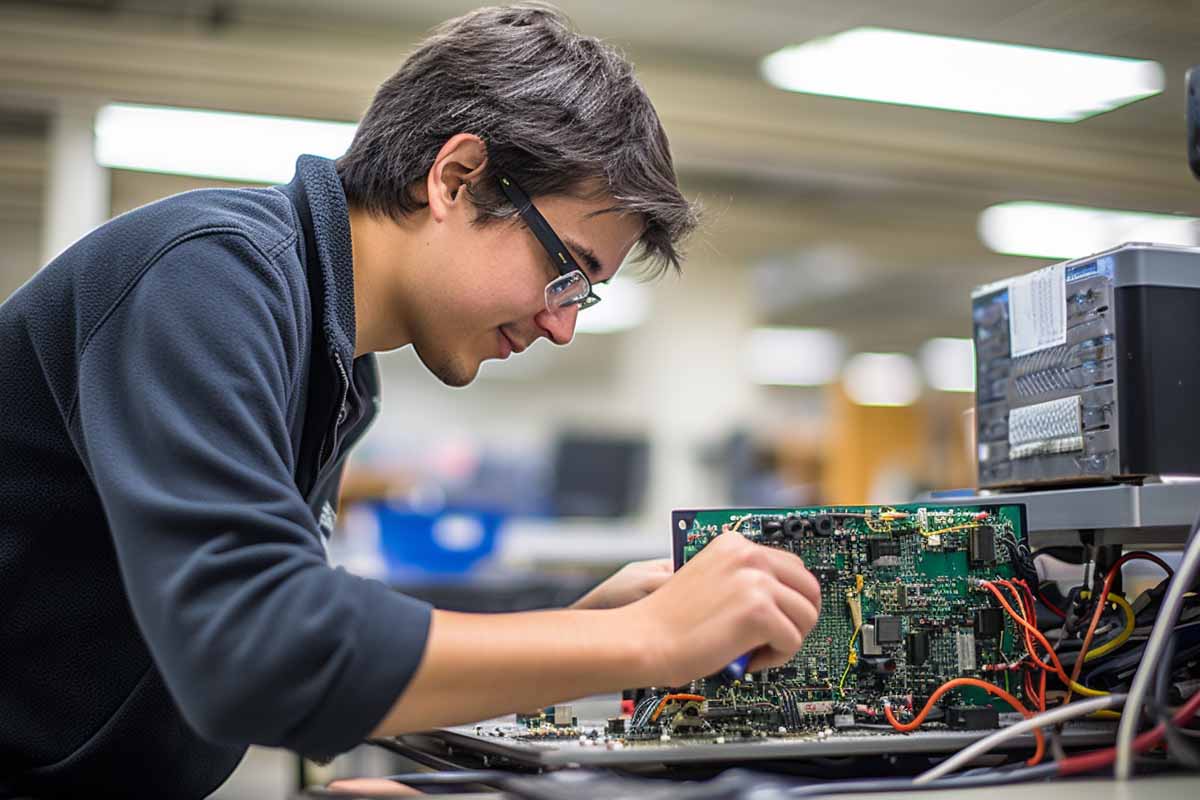
Tech support interviews test more than technical knowledge. Hiring managers want to see how you troubleshoot under pressure, explain problems to non-technical users, and keep a ticket moving when the issue is messy or incomplete.
CompTIA A+ Certification 220-1201 & 220-1202 Training
Master essential IT skills and prepare for entry-level roles with our comprehensive training designed for aspiring IT support specialists and technology professionals.
Get this course on Udemy at the lowest price →Quick Answer
Tech support interview questions are designed to measure troubleshooting skill, communication, customer service, and prioritization. Strong candidates answer with a clear process, give real examples, and explain how they would diagnose hardware, software, and network problems step by step. If you are preparing for an entry-level help desk role, focus on basic IT support interview questions, practical scenarios, and concise answers you can defend.
Definition
Tech support interview questions are job interview prompts used to assess whether a candidate can diagnose technical issues, communicate clearly with users, and follow a structured support process. In a support role, the interviewer is usually testing both technical judgment and customer service behavior, not just memory.
| Primary focus | Technical troubleshooting, communication, and customer support as of June 2026 |
|---|---|
| Common interview areas | Hardware, software, networking, behavioral questions as of June 2026 |
| Best answer style | Step-by-step, specific, and user-focused as of June 2026 |
| Useful frameworks | STAR method, structured troubleshooting, escalation logic as of June 2026 |
| Typical entry-level preparation | Basic hardware, Windows support, DNS, DHCP, ticketing tools as of June 2026 |
| Related training | CompTIA A+ Certification 220-1201 & 220-1202 Training as of June 2026 |
Understanding What Hiring Managers Look for in Tech Support Candidates
A support interview is really a test of whether you can keep users productive while narrowing down the root cause of an issue. Hiring managers are looking for people who can diagnose, communicate, document, and escalate without creating more work for the team.
In a real help desk environment, the job is rarely just “fix the problem.” You might confirm the symptoms, gather details, verify whether the issue is isolated or widespread, and decide whether the case belongs with desktop support, networking, or a higher tier. The best candidates can explain that process in plain language.
What the role actually includes
- Diagnosing issues by asking the right questions and reproducing symptoms when possible.
- Assisting users with passwords, software access, device setup, and connectivity problems.
- Documenting fixes so the next technician does not start from zero.
- Escalating properly when the issue is outside your access, skill level, or approval scope.
That mix is why support interviews are different from pure technical exams. The interviewer wants evidence that you can stay calm, avoid guessing, and keep the user informed. Even a technically correct answer can fail if it sounds impatient, vague, or disconnected from the customer impact.
“A good support technician does not just solve the issue. They reduce confusion, preserve trust, and leave behind a clear record of what happened.”
For candidates building their foundation, ITU Online IT Training’s CompTIA A+ Certification 220-1201 & 220-1202 Training aligns well with the hardware, operating system, and troubleshooting skills employers expect in entry-level support roles. Official vendor documentation from CompTIA® A+™ also reinforces the same practical focus.
What Are the Most Common Tech Support Interview Questions?
The most common tech support interview questions fall into four buckets: technical troubleshooting, behavioral questions, customer service, and role-specific scenarios. If you can answer one or two strong questions from each category, you will usually come across as prepared rather than scripted.
Scenario-based questions are especially common because employers want to see how you think under pressure. A hiring manager is not only listening for the final answer. They want to hear your process: what you check first, what you ask the user, and when you decide to escalate.
Question categories you should expect
- Technical troubleshooting such as “How would you fix a computer that will not turn on?”
- Behavioral questions such as “Tell me about a time you dealt with a frustrated user.”
- Customer service questions such as “How do you explain a technical problem to a non-technical person?”
- Scenario questions such as “What would you do if several users lost network access at once?”
Many interviewers also use questions that sound simple but are designed to expose weak thinking. “What would you do if an application keeps crashing?” is not just a software question. It is a test of whether you check logs, permissions, recent changes, system resources, and whether the issue affects one user or many.
Pro Tip
Prepare short stories from internship work, home lab troubleshooting, freelance help, or school projects. A real example beats a polished but generic answer every time.
If you are searching for common IT support interview questions, basic IT support interview questions, or even basic IT interview questions and answers, focus on answering with structure. The exact wording of the question matters less than the logic behind your response.
How Does Technical Troubleshooting Work in an Interview?
Technical troubleshooting in an interview should follow a clear sequence: identify the issue, isolate the cause, test likely solutions, and confirm resolution. That structure shows methodical thinking and keeps you from jumping straight to a guess.
When you are asked how you would troubleshoot a problem, the interviewer wants to know whether you can think like a technician. A strong answer includes user questions, environmental checks, and a logical order of operations. It should sound like something you would actually do on the job.
- Identify the symptom by asking what changed, when it started, and whether anyone else is affected.
- Check the basics first such as power, cables, recent updates, user permissions, or network status.
- Isolate the problem by testing one variable at a time instead of changing several things at once.
- Apply the likely fix based on the evidence, not a random guess.
- Verify resolution by retesting the original issue and confirming the user can continue working.
Example: computer will not power on
A strong answer would start with the obvious checks: wall outlet, power strip, cable seating, laptop charger, and visible damage. On a desktop, you might check whether the power supply is receiving power, whether the case power button is responsive, and whether any LEDs or fan activity appear when pressing the button.
Then you would move deeper only if the simple checks fail. That could mean trying a known-good power cable, testing with a different outlet, reseating internal connections if you have authorization and training, or swapping in a known-good PSU if the environment allows it. The key is to show you can move from external to internal causes in a logical order.
Example: software is freezing or crashing
For an application issue, you might check Performance symptoms, Task Manager resource usage, recent updates, application logs, and whether the problem affects one user or everyone. You can also mention repairing the installation, clearing cache, checking compatibility, or restarting related services if the platform supports it.
Strong troubleshooting answers sound like a work order, not a lecture. The interviewer should be able to picture your next click.
What Core Technical Concepts Should You Review Before the Interview?
Most basic hardware interview questions with answers pdf-style study guides cover the same fundamentals because employers ask about the same fundamentals. You should be ready to discuss hardware, operating systems, network basics, security hygiene, and support tools without stumbling over definitions.
Hiring managers do not expect an entry-level candidate to know everything. They do expect you to understand what common components do and how to recognize where a failure might be happening. That means being able to explain the difference between a software issue, a Hardware problem, and a network issue.
Review these areas first
- Hardware: CPUs, RAM, storage devices, monitors, keyboards, mice, printers, docking stations, and power issues.
- Operating systems: Windows login problems, profile corruption, updates, driver issues, and basic permissions.
- Networking: IP addresses, DNS, DHCP, Wi-Fi, routers, and basic connectivity checks.
- Security basics: malware symptoms, safe isolation, endpoint protection, and escalation paths.
- Support tools: ticketing systems, remote desktop tools, logs, and diagnostic utilities.
Storage matters because slow systems, boot failures, and file access issues often come from a failing drive or an overloaded disk. Storage problems can look like software failures at first, which is why support technicians need to ask the right questions before acting.
For operating system support, Microsoft’s documentation is still one of the most useful references for real-world troubleshooting. The official Microsoft Learn portal includes guidance on Windows administration, event logging, and device management that maps closely to help desk work.
Note
Interviewers often prefer a candidate who knows the basics well over someone who uses advanced jargon incorrectly. Clear, accurate language is a support skill.
What Networking Knowledge Should You Be Ready to Discuss?
Networking is one of the most frequently tested support topics because many everyday tickets boil down to connectivity. If you can explain why a device gets an IP address, how DNS translates names, and how DHCP assigns settings, you already cover a big portion of common interview questions.
Support technicians do not need to design enterprise networks during the interview. They do need to show they understand the path a connection takes and how to check it. That includes physical connections, wireless status, gateway reachability, name resolution, and whether the issue is local or widespread.
Terms you should be able to explain simply
- DHCP: gives devices an IP configuration automatically.
- DNS: translates names like a website or server name into an IP address.
- IP addressing: identifies a device on the network.
- Packet flow: the path data takes between a client and a destination.
A good support answer for “no internet access” might start with physical checks, move to adapter status, then verify IP settings, DNS resolution, and router or modem health. If a user can reach local resources but not external websites, that may suggest a DNS issue, gateway problem, or upstream outage rather than a broken laptop.
Common support scenarios include printer connectivity problems, intermittent Wi-Fi, and only-one-user-is-affected incidents. For example, if a printer is unreachable, you would verify the device is on, connected, assigned the right address, and reachable from the network segment where the user is working.
For broader networking context, the Cloudflare learning center and Cisco’s official learning materials are useful reference points, and Cisco’s support ecosystem remains a common environment in many workplaces. If you want to align with job-ready fundamentals, Cisco’s official documentation is more relevant than memorizing abstract definitions.
How Do You Answer Hardware Troubleshooting Questions Well?
Hardware troubleshooting questions are easiest to answer well when you think in layers. Start with what the user can see or hear, then move to external checks, then internal components if the situation calls for it. That method shows safety awareness and reduces unnecessary guesswork.
Questions about boot failures, dead peripherals, or replacement decisions are meant to test whether you can separate symptoms from causes. A monitor that appears “broken” may simply have the wrong input selected. A laptop that “will not start” may only have a drained battery or failed AC adapter.
Sample troubleshooting path for a device that will not power on
- Check the outlet or power strip with another device.
- Inspect the power cable, adapter, and charging light if present.
- Confirm the device is connected to the correct input power source.
- Look for diagnostic lights, beep codes, or fan movement.
- Test with a known-good cable or adapter if available.
- Escalate for component testing if the problem points to the PSU, motherboard, or battery.
When the question involves peripherals, mention the easiest checks first. For a mouse or keyboard, verify USB connection, battery status, dongle pairing, port functionality, and whether the same device works on another machine. For a printer, check power, paper, toner or ink, network connection, and queue status before assuming a hardware fault.
Using terms like BIOS messages, diagnostic LEDs, and POST behavior shows you understand how a device communicates failure. The interviewer is not looking for a memorized script. They want evidence that you know where to start and when to stop.
Never say “I would just replace parts until it works.” That answer signals poor discipline, wasted time, and a high chance of introducing new problems.
Official diagnostic guidance from vendors like Dell Support or HP Support is useful when preparing for hardware questions because it reflects how support teams actually isolate device failures.
What Software and Operating System Questions Should You Practice?
Software and OS questions often sound simple, but they are really about your troubleshooting discipline. Application crashes, failed installations, login errors, and slow systems all require you to compare the current state against a known-good baseline.
A strong answer does not stop at “restart the app.” It explains what you would check before and after that step. If an application fails to open, you might verify version compatibility, recent updates, permissions, service dependencies, and whether the problem is user-specific or system-wide.
Examples of strong support actions
- Restart services when an app depends on background processes.
- Check permissions if one user cannot access a file, share, or application.
- Review logs in Event Viewer or application-specific logs for errors and warnings.
- Use Task Manager to check CPU, memory, disk, and startup load.
- Reinstall carefully when corruption or missing files are likely.
For malware-related questions, the safe answer includes isolation, scanning, and escalation. If a machine appears infected, you should disconnect it from the network if policy allows, avoid using it for other tasks, and follow your organization’s endpoint protection workflow. You do not “clean it and hope” without verifying what happened.
Support interviewers also like questions about operating system updates and user profile problems because they reveal whether you understand common change-related failures. A bad update can break a driver, alter permissions, or expose an existing compatibility issue. A profile problem can make it look like the whole system is broken when the problem is limited to one user.
For practical preparation, the official Microsoft Support and Microsoft Learn resources are useful because they show the same operating system workflows many support teams use daily.
How Should You Handle Behavioral and Customer Service Questions?
Behavioral questions are where many technically capable candidates lose momentum. The reason is simple: support work is a service job. You are judged not only on whether you fixed the issue, but also on whether you handled the user professionally while doing it.
The best way to answer these questions is the STAR method: situation, task, action, and result. That format keeps your answer structured and prevents you from drifting into irrelevant detail. It also makes it easier for the interviewer to follow your thinking.
Questions you should rehearse
- How do you handle a frustrated or angry user?
- How do you prioritize multiple requests at once?
- How do you explain a technical issue in plain language?
- Tell me about a time you made a mistake and recovered from it.
When discussing difficult customers, say how you stayed calm, acknowledged the issue, set expectations, and followed up. That shows emotional control and ownership. A support technician who argues with users creates a bigger problem than the original ticket.
Ticketing tools such as ServiceNow and Freshdesk are often part of the workflow, but you should mention them only if you have actually used them or studied how they work. The important point is not the brand name. It is showing that you understand ticket ownership, status updates, SLA awareness, and accurate notes.
Interviewers do not expect perfection. They do expect professionalism, accountability, and the ability to keep the user informed without sounding defensive.
For broader service mindset context, standards from the ITIL ecosystem and operational guidance from vendors like ServiceNow help frame how modern support teams manage incidents and requests.
How Do You Demonstrate Prioritization and Time Management?
Prioritization questions are really asking whether you understand impact. A support technician who treats every ticket as equally urgent will lose trust quickly. The right answer shows you can sort work by business impact, security risk, user count, and deadlines.
A server outage affecting dozens of employees should move ahead of a single-user printer issue. A security incident or suspected malware event may outrank both. At the same time, a lower-priority ticket should still receive communication, status updates, and proper documentation so the user is not left guessing.
Good prioritization factors
- Business impact: how much work is blocked.
- Urgency: whether the issue is time-sensitive.
- Scope: one user, one department, or the entire organization.
- Risk: whether the issue involves security, data loss, or compliance.
- Dependencies: whether other teams are blocked until this is resolved.
You should also explain how documentation supports prioritization. Ticket notes tell the next technician what has already been tested, which is critical when an issue is escalated or reassigned. Good notes reduce duplicate work and help the team make faster decisions.
If you are asked how you manage several requests at once, the answer should sound practical: assess urgency, communicate expected response times, work from highest impact to lowest, and update users when status changes. That is the real rhythm of support work.
For workforce context, the U.S. Bureau of Labor Statistics shows that computer support specialists remain a steady part of the IT labor market, which is one reason hiring managers value technicians who can handle volume without dropping quality.
What Tools, Systems, and Workflows Should You Mention?
Tools matter because they make your answers sound grounded in real work. A candidate who can name a ticketing system, a remote support tool, and a diagnostic utility usually sounds more credible than someone who only speaks in generalities.
That said, do not list tools for the sake of listing tools. Mention the ones you understand and can explain. If you say you have used Remote Desktop, Task Manager, or antivirus scanning tools, be ready to explain what you looked for and what you changed.
Useful tools and workflows to discuss
- Ticketing systems for logging issues, tracking progress, and documenting fixes.
- Remote access tools for observing symptoms and assisting users without walking to the desk.
- Diagnostic utilities such as Task Manager, Device Manager, and logs.
- Endpoint security tools for malware scans, isolation, and remediation.
- Escalation paths for network, server, or application issues outside your control.
Workflows are just as important as tools. Interviewers like hearing that you follow established procedures, confirm the fix, update the ticket, and close the loop with the user. That sequence shows you understand service quality, not just technical repair.
The Microsoft Remote Desktop Services documentation is a good example of how remote support is documented in real environments. If you can speak comfortably about how remote sessions help diagnose issues faster, you will sound closer to a working support technician.
Warning
Do not claim experience with tools you cannot explain. Interviewers often ask follow-up questions that expose inflated resumes in seconds.
How Should You Prepare for the Interview?
The best preparation for tech support interview questions is repetition with structure. Read the question, answer out loud, and tighten your response until it is clear, concise, and specific. This works better than memorizing long scripts because support interviews often shift direction based on what you say.
Start with foundational topics: hardware, networking, Windows troubleshooting, and customer service. Then move into scenario practice. The more you practice speaking through a problem, the easier it becomes to stay calm when the interviewer pushes for details.
A practical preparation plan
- Review basic hardware and software terms.
- Practice explaining DNS, DHCP, and IP addresses in simple language.
- Prepare two or three troubleshooting stories using STAR.
- Study the company’s tools, user base, and support model.
- Run mock interviews and time your answers.
- Prepare a few questions to ask the interviewer about workflow and expectations.
It also helps to build answers around work examples, even if they come from home labs, student projects, volunteer work, or helping family members. A good example of a solved printer issue or Wi-Fi problem is better than a polished answer with no evidence behind it.
If you are preparing for an entry-level role, review the fundamentals taught in the CompTIA A+ Certification 220-1201 & 220-1202 Training path from ITU Online IT Training, then cross-check what you learn against official vendor documentation. That combination gives you both structure and realism.
For salary and job outlook context, the BLS computer support specialist profile is a useful baseline, while salary sites like Glassdoor and PayScale can help you understand how support roles are commonly compensated in the market as of June 2026.
What Common Mistakes Should You Avoid in Tech Support Interviews?
The most common mistake is giving answers that sound correct but do not show real thinking. If you say you would “check everything,” that tells the interviewer almost nothing. They need to hear the actual sequence you would use to narrow down the issue.
Another major mistake is overselling your experience. It is better to say you have not worked with a certain tool yet, but you understand the workflow, than to fake familiarity and get trapped by follow-up questions. Support managers value honesty because it affects escalation and team trust.
Mistakes that hurt strong candidates
- Generic troubleshooting with no sequence or decision points.
- Inflated experience with tools, systems, or environments you do not know.
- Poor communication such as sounding impatient or overly technical.
- Skipping the user impact and focusing only on the technical fix.
- Ignoring documentation even though support work depends on it.
Do not treat customer service as an afterthought. A technician who solves problems but frustrates users is still creating churn. The interview is your chance to show that you can be both competent and easy to work with.
For a reality check on how support work connects to the broader labor market, the U.S. Department of Labor and workforce frameworks like the NICE Workforce Framework help explain why communication, technical support, and problem-solving remain core IT skills.
Key Takeaway
Tech support interview questions test both technical troubleshooting and customer service.
A strong answer explains your process step by step instead of jumping to a guess.
Networking, hardware, and software basics are the most common technical areas employers probe.
Behavioral answers should show patience, empathy, documentation, and clear communication.
Preparation wins: practice out loud, use real examples, and study the tools and workflows you can actually discuss.
CompTIA A+ Certification 220-1201 & 220-1202 Training
Master essential IT skills and prepare for entry-level roles with our comprehensive training designed for aspiring IT support specialists and technology professionals.
Get this course on Udemy at the lowest price →Conclusion
Tech support interview questions are designed to measure how you think, how you communicate, and how you handle pressure when users need help. The strongest candidates combine troubleshooting logic with calm, professional service.
If you are preparing for your next interview, review the basics, practice common scenarios, and build a few clear STAR examples from real experience. That preparation will help you answer confidently whether the interviewer asks about a failed laptop, a DNS issue, a frustrated user, or a ticket backlog.
For candidates targeting entry-level support roles, focusing on the fundamentals taught in ITU Online IT Training’s CompTIA A+ Certification 220-1201 & 220-1202 Training is a practical way to build interview-ready confidence. Study the concepts, practice the language, and be ready to explain not just what you would do, but why you would do it.
CompTIA®, CompTIA A+™, Microsoft®, ServiceNow®, and Freshdesk® are trademarks of their respective owners.
