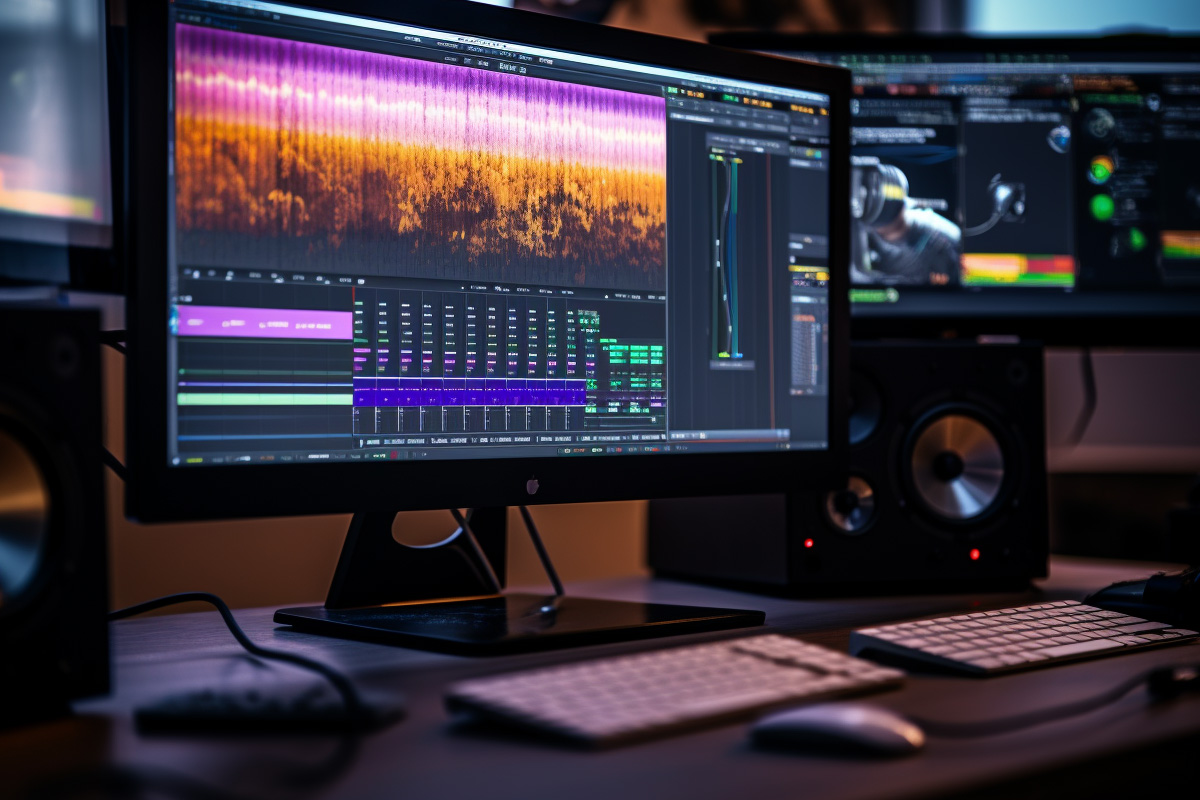
If you need to clean up audio fast, the decision usually comes down to this: do you want the faster audio editor or the studio-standard production platform? For podcast cleanup, voice repair, and video post, Adobe Audition is often the more efficient choice. For large sessions, complex routing, and team-based studio work, Pro Tools is still the stronger fit.
Quick Answer
Adobe Audition wins for speed, cleanup, and straightforward editing workflows, while Pro Tools wins for advanced recording, mixing, session management, and collaboration in professional studios. If your job is mostly dialogue repair, podcast production, or video audio, Audition is usually the better adobe audio editor. If your work involves large multitrack sessions and complex mixes, Pro Tools is the safer long-term choice.
| Primary use case | Fast audio cleanup, podcast editing, and video post as of July 2026 |
|---|---|
| Best for | Solo editors, podcasters, voiceover teams, and video professionals as of July 2026 |
| Strength area | Waveform editing, spectral repair, and batch processing as of July 2026 |
| Studio strength | Session management, routing, and collaborative production as of July 2026 |
| Learning curve | Audition is generally easier; Pro Tools is more demanding as of July 2026 |
| Ecosystem fit | Adobe Creative Cloud for Audition; studio and post-production pipelines for Pro Tools as of July 2026 |
| Decision rule | Pick Audition for speed and cleanup; pick Pro Tools for scale and mixing depth as of July 2026 |
| Criterion | Adobe Audition | Pro Tools |
|---|---|---|
| Cost (as of July 2026) | Subscription-based via Adobe Creative Cloud; price varies by plan as of July 2026 | Subscription-based with tiered plans; price varies by edition as of July 2026 |
| Best for | Fast cleanup, podcast editing, voice repair, and video audio | Large studio sessions, music production, and collaborative post-production |
| Key strength | Efficient editing workflow and strong restoration tools | Deep routing, session control, and professional mixing |
| Main limitation | Less ideal for very large, mix-heavy studio sessions | More complex than needed for simple cleanup jobs |
| Verdict | Pick when you need speed, cleanup, and easier day-to-day editing. | Pick when you need production depth, scale, and team compatibility. |
Adobe Audition vs Pro Tools: which one is the better audio editor for your workflow?
The right answer depends on what you do most often. If your day is built around trimming interviews, removing room noise, fixing voice issues, and delivering clean audio quickly, Adobe Audition usually feels faster and less fussy.
If your projects involve large sessions, multiple contributors, detailed routing, and mix decisions that need to hold up in a studio pipeline, Pro Tools is built for that level of control. This is why the same person might prefer Audition for one job and Pro Tools for another.
The comparison is not really about which app is “better” in a vacuum. It is about which tool reduces friction for the work you actually have to ship.
Good audio software is the one that gets you from rough recording to finished deliverable with the fewest handoffs and the least cleanup overhead.
Note
This comparison is focused on practical workflow, not spec-sheet bragging rights. For many editors, the real difference is whether the software helps them finish faster or manage bigger sessions more safely.
For background, Adobe describes Adobe Audition as a professional audio workstation for mixing, editing, and restoration, while Avid positions Pro Tools as the industry standard for music and audio post-production. Those positioning statements matter because they reflect how each platform is actually used in the field.
What Is Adobe Audition and who is it best for?
Adobe Audition is a professional software application for audio editing, restoration, and multitrack work inside the Adobe ecosystem. It traces its roots to Cool Edit Pro, and that history still shows in how quickly it handles cleanup tasks and waveform-based editing.
Audition is strongest when the job is hands-on editing rather than studio-scale production. It works well for podcasters, video editors, voice actors, e-learning teams, and solo creators who need to fix problems and export clean audio without building a complicated session first.
Where Audition earns its reputation
Audition is known for fast waveform editing, spectral frequency display, and practical repair tools that help remove clicks, pops, hum, hiss, and background noise. The interface is approachable enough for editors coming from video tools, but it still has depth when you need multitrack mixing or detailed restoration.
- Dialogue cleanup: Cut dead air, fix breaths, and remove stumbles quickly.
- Noise reduction: Reduce HVAC hum, fan noise, or room hiss in one pass.
- Batch processing: Apply the same preset to multiple files, such as a full podcast season.
- Adobe integration: Move audio between Premiere Pro and Audition without rebuilding the workflow.
That last point matters more than many buyers expect. If you are already editing video in Premiere Pro, Audition can become a fast repair station for dialogue cleanup, then hand the project back for final picture edits. Adobe documents these workflows in Adobe Help, which is useful when you need official guidance instead of guesswork.
Pro Tip
If your day includes repeated cleanup jobs, build presets for noise reduction, EQ, compression, and loudness normalization. That saves far more time than memorizing every menu path.
Audition also tends to fit smaller teams better. When one person owns the edit, export, and final delivery, the app’s lower friction can matter more than deep studio features.
What Is Pro Tools and why is it considered an industry standard?
Pro Tools is a professional digital audio workstation designed for recording, editing, mixing, and post-production at a studio level. Avid has long marketed it as the benchmark for high-end audio production, and that reputation is reinforced by how often it appears in recording studios, post houses, and collaborative production pipelines.
Pro Tools is often the better fit when the project is bigger than a simple edit. Think music sessions with many tracks, film and TV dialogue workflows, or audio post jobs where multiple engineers and producers need to move through the same session without breaking consistency.
Why studios still rely on Pro Tools
Pro Tools shines in environments where session structure matters. It offers deep routing, robust automation, high-track-count handling, and a workflow that scales better when the number of voices, stems, and mix decisions starts to rise.
- Routing depth: Flexible buses and signal flow for advanced mixes.
- Session management: Better organization for long-form, high-track-count projects.
- Collaboration: Easier to fit into professional studio expectations.
- Mix precision: Strong automation and detailed control for final production work.
That is why Pro Tools is often the default in environments where compatibility matters as much as capability. If a client, mix engineer, or post-production supervisor expects Pro Tools sessions, using something else can add unnecessary translation work.
For official product and learning details, Avid’s Pro Tools page and support documentation are the best reference points. They are the source of truth when you need to confirm platform capabilities, editions, and workflow expectations.
How does editing speed compare between Adobe Audition and Pro Tools?
Adobe Audition is usually faster for everyday cleanup tasks, while Pro Tools is faster only after you have invested real time in its workflow. That difference matters if your work is dominated by short turnaround edits, not long studio sessions.
Audition feels efficient because it is built around practical editing tasks. Cutting a podcast intro, trimming an interview pause, or removing a bad take is straightforward. You can get in, make the fix, and export without spending much time setting up tracks, routing, or advanced session structure.
Where Audition feels faster
- Open the file or session.
- Use waveform or multitrack tools.
- Apply cleanup or cut edits.
- Export for delivery.
That workflow works especially well for podcast editors, social content teams, and voiceover producers. If your job is mostly “fix this audio and send it back,” speed beats complexity.
Where Pro Tools can slow simple edits down
Pro Tools is powerful, but power comes with overhead. For a basic cleanup job, you may spend extra time navigating session organization, track structure, and routing choices that do not add value to a simple deliverable.
According to the American Federation of Film Editors and other post-production professionals, familiarity with a tool often matters as much as the tool itself. An editor who lives in Pro Tools may move faster there, but for most cleanup-first workflows, Audition usually feels more direct.
Key Takeaway
For short-form editing, the fastest app is the one that minimizes setup. Audition usually wins because it is designed for cleanup-first work rather than session-first work.
Which software is better for noise reduction and audio restoration?
Adobe Audition is the stronger choice for noise reduction, dialogue repair, and restoration-heavy work. Its spectral display and repair tools are designed for fixing problems you can see and hear, not just mixing clean audio into a polished session.
This matters in the real world. A remote interview might contain HVAC hum, a laptop fan, room echo, or clipped consonants. Audition gives editors more direct tools to reduce the damage without rebuilding the entire file from scratch.
Common repair tasks Audition handles well
- Hiss reduction: Useful for noisy USB microphones or untreated rooms.
- Click and pop removal: Helpful for mouth noises, vinyl transfer cleanup, or bad connections.
- Hum removal: Useful when power-line noise sneaks into a recording.
- Spectral repair: Helps isolate and reduce specific unwanted sounds.
Pro Tools can absolutely handle editing and cleanup, but restoration is not its main claim to fame. In many projects, it is the finishing platform rather than the rescue tool. If the audio starts in rough shape, Audition usually gets you to usable output faster.
Adobe documents many of these capabilities in its official Audition help pages. If your work includes cleanup of noisy interviews, those tools are worth learning early because they reduce rework later in the pipeline.
The best restoration workflow is the one that makes damaged audio usable without creating new artifacts that sound worse than the original problem.
How do multitrack editing and session management compare?
Multitrack editing is where both tools become more interesting, but they still serve different audiences. Audition can manage smaller multitrack projects very well, while Pro Tools is built to stay organized when sessions get large, layered, and hard to control.
For a podcast with intro music, two voices, a few inserts, and a final stereo mix, Audition is usually enough. For a music production or full post session with dozens of stems, alternate takes, temp tracks, and detailed revisions, Pro Tools has the structural advantage.
When Audition is enough
- Podcast episodes: Host, guest, music bed, and ad reads.
- Voiceover production: A few takes, cleanup, and final mix.
- Video audio fixes: Dialogue, music, and effects for a short piece.
When Pro Tools becomes the better fit
- Music production: Large track counts, stems, and revisions.
- Sound design: Layered effects and detailed timeline control.
- Film and TV post: Complex organization across many cues and revisions.
The practical difference is simple: the more layers you add, the more you need stable session management. Pro Tools is better at keeping the project readable when the timeline becomes crowded and the stakes go up.
That is one reason many studios standardize on Pro Tools. Not because Audition cannot do multitrack work, but because Pro Tools gives teams a more predictable structure when multiple hands touch the same project.
How do mixing, routing, and advanced production controls differ?
Mixing is where Pro Tools starts to pull ahead for serious production work. Audition can absolutely mix audio for delivery, but Pro Tools is stronger when the mix itself is the project, not just the final step.
Routing and automation are the key differences. Pro Tools gives experienced users more control over signal flow, buses, stems, sends, and automation moves that need to be precise and repeatable. That level of control matters in studio music production, surround-style workflows, and client-heavy post sessions.
Why Pro Tools is better for complex mixes
- Bus structure: Better for organizing groups of dialogue, music, and effects.
- Automation: More detailed control over levels, pan, and processing changes.
- Session consistency: Better for handoff between engineers or mix revisions.
- Production scale: Handles projects where “good enough” is not enough.
Audition is better described as efficient for delivery-focused work. It can mix, but its strength is getting a finished result fast rather than building a deeply engineered production environment.
If you are working on a studio album, a film mix, or a long-form project with many deliverables, Pro Tools is usually the better long-term platform. If you are producing a podcast that just needs balanced dialogue and music, Audition is more practical.
The difference is not subtle once projects get bigger. A basic mix can live almost anywhere. A complex mix needs a tool that keeps the structure visible and the revisions manageable.
How important is collaboration and team workflow?
Collaboration is one of the biggest reasons Pro Tools keeps its place in professional studios. It is commonly chosen in environments where editors, engineers, producers, and assistants need to work from the same session format without translation problems.
That matters when a project moves between people. One person tracks dialogue, another cleans it up, another mixes it, and a final reviewer requests changes. Pro Tools is built for that kind of handoff more naturally than a cleanup-first editor.
Why Pro Tools fits team pipelines
- Shared session expectations: Easier to hand off in studio settings.
- Standardization: Fewer surprises when multiple professionals touch the same project.
- Revision handling: Better for structured feedback loops.
Audition is still useful in collaborative environments, especially for small teams or agencies. If one editor cleans up the audio and another person only needs to approve or repurpose it, Audition can be the faster handoff tool.
For large production teams, though, the question is not just “Can the software do the job?” It is “Can everyone else in the chain open, edit, and trust the session without friction?” Pro Tools answers that question better in most studio contexts.
That team compatibility is one reason Avid remains so entrenched in professional audio. When the pipeline is built around the same tool chain, fewer hours get lost to conversion, relinking, and session translation.
Which software integrates better with other tools and creative ecosystems?
Integration is where Audition has a clear advantage for Adobe-based creators. If your workflow already includes Premiere Pro, After Effects, or other Creative Cloud tools, Audition fits naturally into that ecosystem and reduces the number of handoffs you have to manage.
That is especially valuable for video editors. You can send dialogue out for cleanup, fix it in Audition, and bring it back without turning a simple audio fix into a technical detour. Adobe’s own documentation makes this workflow easy to follow in practice.
Why ecosystem fit matters
- Less export friction: Fewer manual file transfers.
- Fewer mistakes: Lower chance of version mismatch or wrong exports.
- Faster revisions: Easier to make changes when the source project stays connected.
Pro Tools has a different kind of ecosystem strength. It is deeply embedded in studio and post-production workflows, where file exchange, plug-in compatibility, and session expectations matter more than a broad creative suite connection.
For many teams, the right ecosystem is the one that matches the people involved. A solo creator editing video audio will get more value from Adobe integration. A studio that mixes music or post audio for clients will often get more value from Pro Tools compatibility.
For technical reference, Avid’s Pro Tools support material and Adobe’s Audition documentation remain the most reliable sources for current workflow details and supported features as of Avid and Adobe Help Center.
How do pricing, access, and long-term value compare?
Pricing is only part of the decision. Both tools use subscription-style access, so the real question is whether the software saves enough time to justify its monthly cost.
If you mostly work on cleanup-heavy jobs, Audition often delivers better value because it reduces editing time. If you need a platform that can handle complex studio production and team collaboration, Pro Tools may be worth the cost even if it feels heavier for simple tasks.
What buyers should think about
- Project volume: Do you edit one project a week or several every day?
- Project complexity: Are you cleaning audio or building large sessions?
- Team requirements: Will other professionals need the same session format?
- Delivery pressure: Do you need speed, consistency, or both?
Adobe publishes its Creative Cloud plans, and Avid publishes its Pro Tools offerings on the official Pro Tools page. Always check the current plan details before buying, because pricing and packaging can change.
The long-term value question is simple. Audition is usually the smarter spend for creators who need a reliable adobe audio editor for regular cleanup and delivery. Pro Tools is the smarter spend when your audio work is part of a larger professional production system.
Warning
Do not choose solely on subscription price. A cheaper tool can cost more if it slows down cleanup, creates extra exports, or does not fit the rest of your workflow.
Is Adobe Audition easier to learn than Pro Tools?
Adobe Audition is generally easier to learn for users who care about trimming, cleanup, and export. Pro Tools has a steeper learning curve because it expects users to understand more about track structure, routing, and studio-style session control.
This difference shows up quickly for beginners. A video editor or content creator often adapts to Audition faster because the editing tasks feel familiar. Pro Tools rewards patience, but the early friction is real.
Common beginner friction points in Pro Tools
- Session setup: More decisions before you start editing.
- Routing: More to understand before you can mix confidently.
- Navigation: Powerful, but not always intuitive on day one.
Audition is usually less intimidating because it gets you closer to the editing task sooner. That does not mean it is simplistic. It means the tool is more forgiving when your goal is clean audio, not a fully engineered production pipeline.
If your team includes people who only edit audio occasionally, that matters. A lower learning curve reduces mistakes and lowers the number of support questions your internal workflow has to absorb.
For workforce context, the U.S. Bureau of Labor Statistics Occupational Outlook Handbook consistently shows that media and audio-related jobs reward practical production skills. In plain terms: the software you learn should match the work you are expected to deliver.
Which software wins for different audio workflows?
Adobe Audition wins for cleanup-first workflows, and Pro Tools wins for production-first workflows. That is the cleanest way to decide without getting stuck in feature noise.
Pick Adobe Audition when you do this kind of work
- Podcast editing: Fast dialogue cleanup, intro/outro assembly, and export.
- Voiceover production: Remove noise, polish takes, and deliver quickly.
- Video post-production: Tight integration with video editing workflows.
- Social clips and e-learning audio: Speed matters more than studio complexity.
If your real job is to make recorded speech sound clean and professional, Audition is usually the better fit. It is the stronger adobe audio editor for editors who need efficiency.
Pick Pro Tools when you do this kind of work
- Music production: Large sessions, many tracks, and revision-heavy mixing.
- Studio collaboration: Multiple editors or engineers working together.
- Advanced post-production: Complex routing, stems, and detailed mix control.
- Client-facing studio work: Compatibility and expectations matter.
If your day is built around mix decisions, signal flow, and professional handoff, Pro Tools has the stronger production model. It is less about quick fixes and more about controlling the whole audio chain.
Some users ask about adbe audition or adobe au when searching for Audition because they are looking for the same product under shorthand or misspelled terms. Others compare adobe ableton by mistake when they really mean a DAW versus an audio editor. The important distinction is simple: Ableton Live is primarily a music production tool, while Audition is centered on editing, cleanup, and restoration.
Adobe Audition vs Pro Tools: final verdict
Adobe Audition is the better choice for fast cleanup, voice editing, and Adobe-based video workflows. Pro Tools is the better choice for serious studio production, advanced mixing, and collaboration at scale.
Pick Adobe Audition when your priority is speed, restoration, and straightforward delivery; pick Pro Tools when your priority is session complexity, mix control, and professional team workflows. That is the decision rule most editors can use without overthinking it.
Key Takeaway
- Audition wins for cleanup: It is usually faster for podcast editing, voice repair, and video audio work.
- Pro Tools wins for scale: It handles large sessions, routing, and studio collaboration more naturally.
- Workflow matters more than features: The best tool is the one that matches your actual production pipeline.
- Adobe users get extra value from Audition: Premiere Pro and Creative Cloud integration reduces handoff friction.
- Choose based on the job: Cleanup-first work points to Audition; mix-first work points to Pro Tools.
For most editors, the answer is practical, not theoretical. If you need a fast, reliable audio editor for daily cleanup tasks, choose Audition. If you need a deeper platform for studio production and collaborative mixing, choose Pro Tools.
If you are still deciding, start with your most common project type and work backward. The software that saves the most time on your normal jobs is the one that wins.
Adobe, Adobe Audition, and Creative Cloud are trademarks of Adobe Inc. Pro Tools is a trademark of Avid Technology, Inc.
