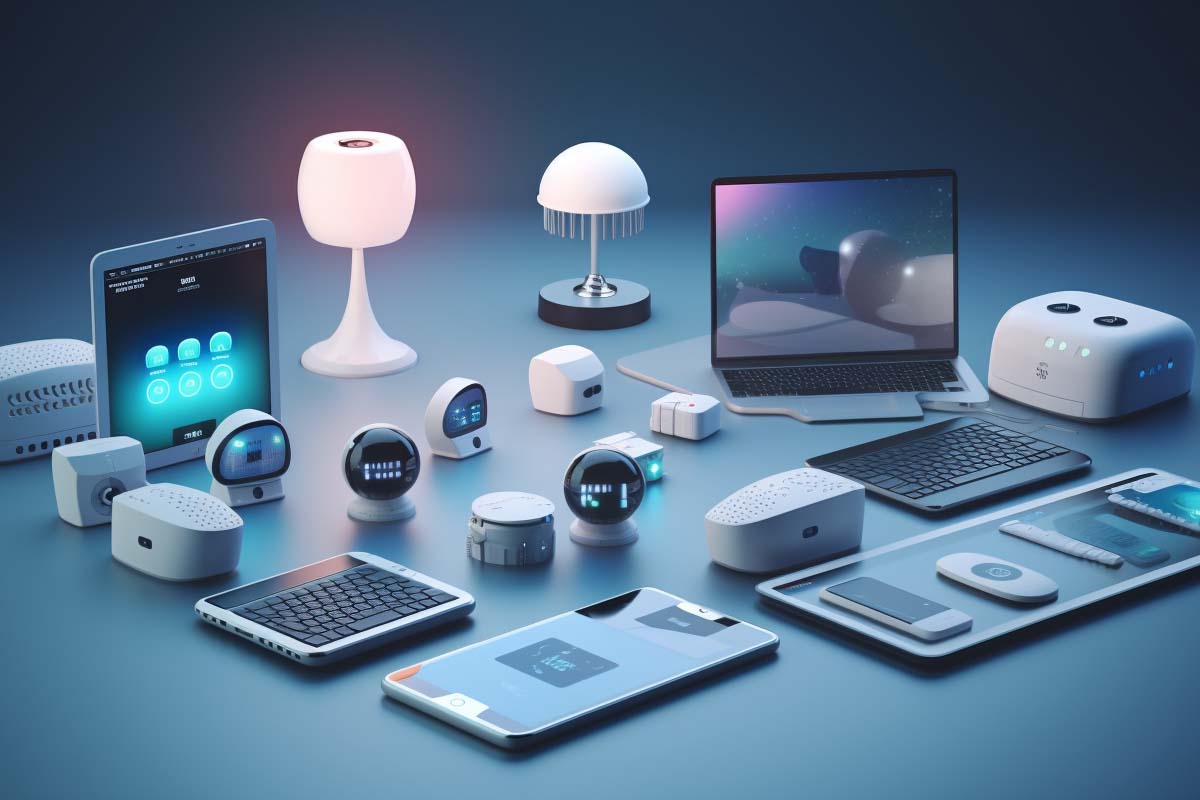
One smart speaker on a counter is not the Internet of Things. A digital nervous system of sensors, devices, networks, and software is what actually changes homes, businesses, and cities. If you are trying to understand internet of things examples devices, this article breaks down what IoT really is, how it works, where it shows up, and why IT teams have to manage it like a real operational platform—not a pile of gadgets.
CompTIA Cloud+ (CV0-004)
Learn practical skills to confidently troubleshoot and support cloud operations, gaining the ability to restore services quickly in real-world scenarios.
Get this course on Udemy at the lowest price →Quick Answer
The Internet of Things (IoT) is a network of physical devices that collect data, send it over a network, and trigger actions based on rules or analytics. As of August 2026, IoT spans consumer products, industrial equipment, healthcare devices, and smart infrastructure, making visibility, security, and lifecycle management essential for IT operations.
Definition
The Internet of Things (IoT) is a network of physical objects—such as sensors, appliances, machines, vehicles, and infrastructure—that collect data, exchange it over networks, and act on that data through automation, analytics, or human response. In practical terms, IoT turns physical events into digital intelligence that can be monitored, measured, and managed.
| Core idea | Connected physical devices that sense, transmit, and act on data |
|---|---|
| Common connectivity | Wi-Fi, Bluetooth, cellular, LPWAN, and Ethernet as of August 2026 |
| Typical data sources | Temperature, motion, vibration, pressure, location, occupancy, and usage data |
| Primary business value | Automation, better visibility, predictive maintenance, and faster decisions |
| Main IT concerns | Inventory, firmware updates, access control, segmentation, and device lifecycle management |
| Where it appears | Homes, factories, hospitals, vehicles, offices, utilities, and smart cities |
| Related skill area | Cloud operations, monitoring, and troubleshooting concepts aligned with CompTIA® Cloud+ (CV0-004) |
What Is the Internet of Things, Really?
The Internet of Things is more than internet-connected gadgets that send alerts to a phone. It is a system where physical objects collect data, share it over a network, and contribute to automated or informed decisions. The real value is not the device itself; it is the information the device produces and the action that follows.
That is why IoT includes far more than smart speakers and fitness trackers. Industrial pumps, medical monitors, cameras, elevators, refrigerated trucks, energy meters, and building controllers all fit the same model when they are connected and producing usable data. The difference between a standalone device and an IoT device is participation in a broader decision-making ecosystem.
For IT teams, that shift matters. Each device becomes an asset that must be inventoried, secured, supported, and retired with the same discipline used for laptops or servers. The scale is often larger, the hardware more diverse, and the patching process less convenient.
IoT is not a product category. It is an operating model that turns physical events into digital decisions.
The term also comes up often in searches like $iot and internet of things products, but the useful question is simpler: what business or operational problem does the device solve? That answer determines whether the deployment is valuable or just noisy.
- Sensors gather data from the physical world.
- Connectivity moves that data across a network.
- Software platforms process and store the information.
- Rules or analytics decide whether to alert a person or trigger an action.
Official definitions and architecture guidance are useful here. Cisco® explains IoT as a system of connected physical objects, while Microsoft® Azure IoT documentation shows how devices, gateways, and cloud services work together in practice. See Cisco and Microsoft Learn for vendor-level detail.
How Does IoT Work From Sensor to Action?
IoT works by moving data through a simple chain: a device senses something, connectivity sends the data, a platform processes it, and a response is generated. The process can be fully automatic or can create an alert for a human to review. In both cases, the point is the same: turn a physical event into a decision faster than manual observation would allow.
- Data is captured by a sensor or embedded device. A thermostat measures temperature, a vibration sensor detects abnormal machine movement, or a camera identifies motion.
- The data is transmitted using Wi-Fi, Bluetooth, cellular, Ethernet, or a low-power protocol such as LPWAN depending on range, power, and bandwidth requirements.
- The platform processes the event in a cloud service, a local gateway, or an edge node. This is where filtering, aggregation, rules, and analytics happen.
- An action is triggered such as turning on HVAC, sending a ticket, notifying a nurse, or shutting down a failing motor.
- The result is logged for monitoring, compliance, troubleshooting, or later analysis.
Latency matters when the action needs to happen immediately. A smart doorbell can tolerate a delay. A production line motor fault or medical alert cannot. That is why many deployments use Edge Computing to analyze data close to the source and reduce round-trip delays. Cloud platforms still matter for long-term storage, fleet management, dashboards, and advanced analytics, which is where Cloud Computing fits into the architecture.
Pro Tip
If the device controls something physical, test the failure path as carefully as the success path. The worst IoT incidents happen when a device loses network access, reboots into a default state, or sends bad telemetry and nobody notices.
This is also where operational skills overlap with cloud work. If your team is responsible for service restoration, monitoring, and troubleshooting in hybrid environments, the same discipline taught in CompTIA® Cloud+ (CV0-004) applies to IoT platforms, gateways, and device back ends.
How Did IoT Evolve From Novelty to Infrastructure?
The early Internet of Things story is often traced to a Carnegie Mellon Coke machine that reported its inventory and temperature remotely. That example mattered because it proved a simple idea: a physical object could become more useful when it could report its state without a person walking up to it. It was small, but the operating principle was huge.
Another early consumer moment came with internet-connected appliances such as the LG smart refrigerator, which helped move connected devices out of labs and into the public imagination. People started to see that a refrigerator, light switch, or camera could send data and receive instructions. That shift helped normalize the idea of internet-connected objects in everyday life.
What changed over time was not just the hardware. Cloud platforms became more scalable, mobile apps made remote control convenient, and sensors got cheaper and smaller. Better analytics made the data useful. Together, those changes turned IoT from a novelty into a practical operating model for business and industry.
- Then: connected devices were mostly demos, prototypes, or convenience features.
- Now: connected devices support maintenance, safety, efficiency, and customer experience.
- Next: IoT systems will rely more on automation, edge intelligence, and interoperability.
For a standards perspective, the NIST Cybersecurity Framework and NIST IoT resources help explain why device identity, patching, and risk management became central issues as deployments matured. That same maturity is why IoT is now part of serious IT governance discussions rather than product marketing.
What Are Common Internet of Things Examples Devices People Use Now?
Common internet of things examples devices include smart thermostats, smart speakers, video doorbells, fitness trackers, connected lighting, and leak detectors. These devices look simple on the surface, but they quietly collect useful signals and convert them into actions, alerts, or automation. That is why they have become familiar entry points into IoT for homes and small businesses.
A smart thermostat can learn occupancy patterns and reduce energy use when no one is home. A video doorbell can detect motion, record clips, and push alerts. A fitness tracker can monitor heart rate, sleep, and activity trends. Each device delivers a tiny stream of data, but those small data points are useful because they accumulate into patterns.
- Smart thermostats adjust heating and cooling based on schedules, occupancy, or remote commands.
- Smart speakers combine voice control with home automation integrations.
- Video doorbells provide motion detection, two-way audio, and video recordings.
- Fitness trackers record activity, sleep, and biometric trends.
- Connected lighting supports remote control, scenes, scheduling, and energy savings.
- Leak detectors alert users early when water is detected near appliances or basements.
Why do these consumer devices matter to IT?
They matter because every connected device creates an administration burden. Firmware updates, account access, app permissions, Wi-Fi credentials, and data retention settings all need attention. A home may tolerate a messy setup. A business cannot.
Vehicle telematics and connected cars are another strong example. They report location, engine diagnostics, tire pressure, fuel usage, and maintenance warnings. That data supports safety, fleet management, and predictive maintenance. The same logic shows up in enterprise contexts, only at greater scale.
For reference on broader market and workforce impact, the U.S. Bureau of Labor Statistics provides useful job and industry context, while CompTIA workforce reports frequently show how connected environments increase demand for technical support, security, and cloud management skills as of August 2026.
What Are Industrial and Business IoT Examples in the Real World?
Industrial IoT applies connected devices to factories, warehouses, fleets, offices, and field operations. The goal is usually not convenience. It is visibility, uptime, efficiency, and cost control. In many environments, one avoided outage or one reduced manual inspection cycle justifies the deployment.
Factory sensors are the clearest example. A vibration sensor on a motor can detect early signs of failure long before the machine breaks. A temperature probe can reveal overheating. Pressure sensors can expose abnormal operating conditions. When that data is tied to analytics, maintenance teams can replace parts before production stops.
- Manufacturing uses vibration, temperature, and pressure sensors for predictive maintenance.
- Logistics uses GPS, RFID, and condition monitoring to track shipments and assets.
- Warehouses use connected scanners, location tags, and inventory systems for better visibility.
- Office buildings use IoT to control lighting, HVAC, and energy consumption.
- Agriculture uses soil sensors, irrigation controllers, and weather-connected systems to improve yields and conserve water.
This is where the difference between data and action becomes obvious. A warehouse full of sensors is not valuable by default. It becomes valuable when it reduces stockouts, shortens search time, improves safety, or lowers energy use. That is why enterprises should define the outcome first and the hardware second.
For operational excellence, IT teams often need to combine device management with Diagnostics and Performance monitoring. If the sensor says a machine is failing, someone still has to find the root cause, validate the data, and coordinate the response. That is a cloud-and-operations problem as much as an IoT problem.
| IoT Use Case | Business Benefit |
|---|---|
| Predictive maintenance | Less downtime and fewer emergency repairs |
| Inventory tracking | Better asset visibility and fewer lost items |
| Energy management | Lower operating costs and more efficient facilities |
| Fleet monitoring | Improved routing, safety, and maintenance scheduling |
For industrial and operational guidance, official vendor documentation from Cisco and AWS is useful because it shows how device data is collected, secured, and integrated into scalable systems.
How Is IoT Transforming Healthcare, Cities, and Infrastructure?
IoT in healthcare helps clinicians and patients monitor conditions remotely, flag anomalies faster, and reduce unnecessary in-person checks. Wearables can track activity and heart-related trends. Medical monitors can alert staff to changes in vitals. Connected devices support early intervention, which is often the difference between a manageable issue and a crisis.
In smart cities, IoT shows up in traffic lights, parking sensors, street lighting, and air-quality monitoring. These systems help city managers respond to congestion, conserve energy, and track environmental conditions in real time. Utility providers also use connected devices to watch equipment health, usage patterns, and fault conditions across power, water, and communications infrastructure.
- Healthcare uses remote patient monitoring, wearable devices, and connected medical equipment.
- Transportation uses traffic sensors and fleet tracking to improve flow and safety.
- Utilities use smart meters and grid sensors to monitor usage and detect issues faster.
- Public safety uses environmental sensing and connected cameras for awareness and response.
The more critical the system, the less room there is for unreliable devices, weak governance, or delayed response.
That is why Reliability and Resilience are not optional in city or healthcare deployments. A stalled sensor in a smart home is annoying. A stalled sensor in a hospital or water system can create risk. The design expectations are completely different.
For regulatory context, healthcare and public-sector environments often align with requirements discussed by HHS, NIST, and CISA, especially when devices handle sensitive data or support critical operations.
Why Does IoT Matter to IT Operations and Asset Management?
IoT matters to IT operations because each connected device is an operational asset with an identity, a configuration, a lifecycle, and a risk profile. Once IoT enters the environment, traditional asset management is no longer enough. Teams need to know what the device is, who owns it, where it is, what version it runs, and when it should be replaced.
That requirement becomes obvious during patching. Unlike laptops or servers, many IoT devices have limited interfaces, vendor-specific update paths, or long deployment cycles. Some devices may sit in a ceiling, on a pole, in a machine cabinet, or at a remote site. Updating them can be expensive and disruptive.
- Inventory must include device type, location, owner, and firmware version.
- Configuration management must cover credentials, network settings, and feature flags.
- Access control must limit who can administer devices and view data.
- Lifecycle management must define onboarding, patching, replacement, and retirement.
Shadow IoT is a real problem. It happens when devices appear on the network without formal approval or visibility. A smart TV in a conference room, an unmanaged camera in a branch office, or an environmental sensor added by a facilities contractor can all create risk if no one tracks them. The issue is not just security. It is also supportability and compliance.
For IT teams managing cloud-connected platforms, the same discipline used in Configuration Management and asset governance applies directly to IoT. That connection is one reason cloud operations skills are so relevant in IoT-heavy environments.
What Security Risks and Governance Challenges Does IoT Create?
IoT security is difficult because many devices ship with weak defaults, limited patching options, and broad network exposure. Common problems include default passwords, outdated firmware, unsecured APIs, weak encryption, and poor segmentation. Once compromised, a device can leak data, be used for surveillance, or become a foothold for broader intrusion.
The risk is not theoretical. Compromised devices can be used for Lateral Movement, especially when they sit on flat networks or share credentials with more sensitive systems. A camera or printer is often treated as harmless, but any trusted device can become a bridge if security controls are weak.
Warning
Never assume an IoT device is low risk because it is small or simple. If it has network access, it has attack surface. If it has an admin interface, it needs authentication, logging, and update planning.
Governance is where many projects fail. Teams need approval workflows, update policies, segmentation standards, and retirement procedures before deployment—not after the first incident. Devices that are hard to patch or physically remote require even stricter planning because the cost of delay is much higher.
Security guidance from NIST and the IoT security work reflected in official vendor documentation from Microsoft and AWS all point to the same basic rule: build identity, segmentation, and updateability into the design from day one.
What Are the Best Practices for Deploying IoT Successfully?
Successful IoT deployment starts with a business problem, not a device catalog. If the goal is reducing energy cost, improving machine uptime, or tracking assets, the technology should be selected to serve that goal. Buying devices first often leads to sprawl, unclear ownership, and weak adoption.
Interoperability matters because a single vendor rarely owns the whole environment. A strong IoT architecture can handle mixed device types, integrate with existing systems, and support centralized monitoring. Scalability matters too. A solution that works for 20 devices may collapse at 2,000 if the platform, network, and support model were never designed for growth.
- Define the problem in business terms and identify the outcome you want.
- Select devices that support secure updates, logging, and clear vendor support.
- Segment the network so IoT traffic does not sit on the same flat network as core systems.
- Enforce access control with unique credentials and least privilege.
- Document the lifecycle from procurement through retirement.
- Assign ownership to a team or administrator who is accountable for support and risk.
Monitoring is just as important as deployment. If a device stops reporting, begins transmitting unusual data, or misses an update window, someone has to know immediately. That is where logging, alerting, and operational dashboards become part of the IoT strategy.
For governance and control alignment, frameworks and standards from ISACA and ISO/IEC 27001 are useful reference points, especially when IoT devices touch sensitive operational or customer data.
What Does the Future of IoT Look Like?
The future of IoT will be defined less by how many devices are connected and more by how intelligently those devices respond. AI and analytics are making IoT systems more predictive, more adaptive, and in some cases more autonomous. Instead of simply reporting a problem, a device may soon help determine the best response in real time.
Edge Computing is becoming more important because it cuts latency and reduces dependence on constant cloud communication. That matters for factories, transportation, remote sites, and time-sensitive healthcare workflows. It also reduces bandwidth pressure when thousands of devices are sending data at once.
- Digital twins will use sensor data to model equipment, buildings, and processes in real time.
- Predictive maintenance will continue to reduce outages and extend asset life.
- Interoperability standards will make multi-vendor environments easier to manage.
- Automation will shift from simple alerts to smarter, context-aware actions.
That evolution increases the value of operational cloud skills. Teams that can restore services, monitor environments, and troubleshoot distributed systems will be better prepared for large IoT estates. That is one reason the practical focus of CompTIA® Cloud+ (CV0-004) maps well to the realities of modern connected infrastructure.
Industry and workforce groups such as the World Economic Forum and official labor data from the BLS continue to show that digitally managed physical systems require more technical oversight, not less. IoT is adding complexity, but it is also creating better visibility for organizations that can manage it well.
Key Takeaway
IoT is a system for turning physical events into digital decisions.
Common internet of things examples devices include thermostats, cameras, wearables, connected cars, and industrial sensors.
How IoT works depends on sensor data, connectivity, processing, and an action triggered by rules or analytics.
IoT creates real operational value only when visibility, security, and lifecycle management are built in from the start.
Edge computing, cloud platforms, and automation will make future IoT systems faster and more intelligent.
CompTIA Cloud+ (CV0-004)
Learn practical skills to confidently troubleshoot and support cloud operations, gaining the ability to restore services quickly in real-world scenarios.
Get this course on Udemy at the lowest price →Conclusion
IoT is not just about smart gadgets on a shelf. It is a foundational shift in how physical environments generate data, how decisions get made, and how work gets done. Once devices can sense, report, and act, they become part of the operational stack and must be managed that way.
The core lessons are straightforward. IoT works by collecting data from the physical world, moving that data through a network, processing it in a platform, and triggering action. It appears everywhere—from homes and vehicles to hospitals, factories, utilities, and cities. And once it is deployed, IT teams must treat it as a governed asset class with inventory, security, updates, and retirement planning.
The organizations that benefit most from IoT are the ones that build visibility first and novelty second. If you can track the device, secure the device, and support the device across its lifecycle, you can use IoT to improve efficiency, reduce risk, and make better decisions at scale.
If your team is expanding into cloud-connected device management, align your operations, monitoring, and troubleshooting practices now. That preparation will pay off as connected systems become more embedded in homes, businesses, cities, and critical infrastructure.
CompTIA® and Cloud+ are trademarks of CompTIA, Inc.
