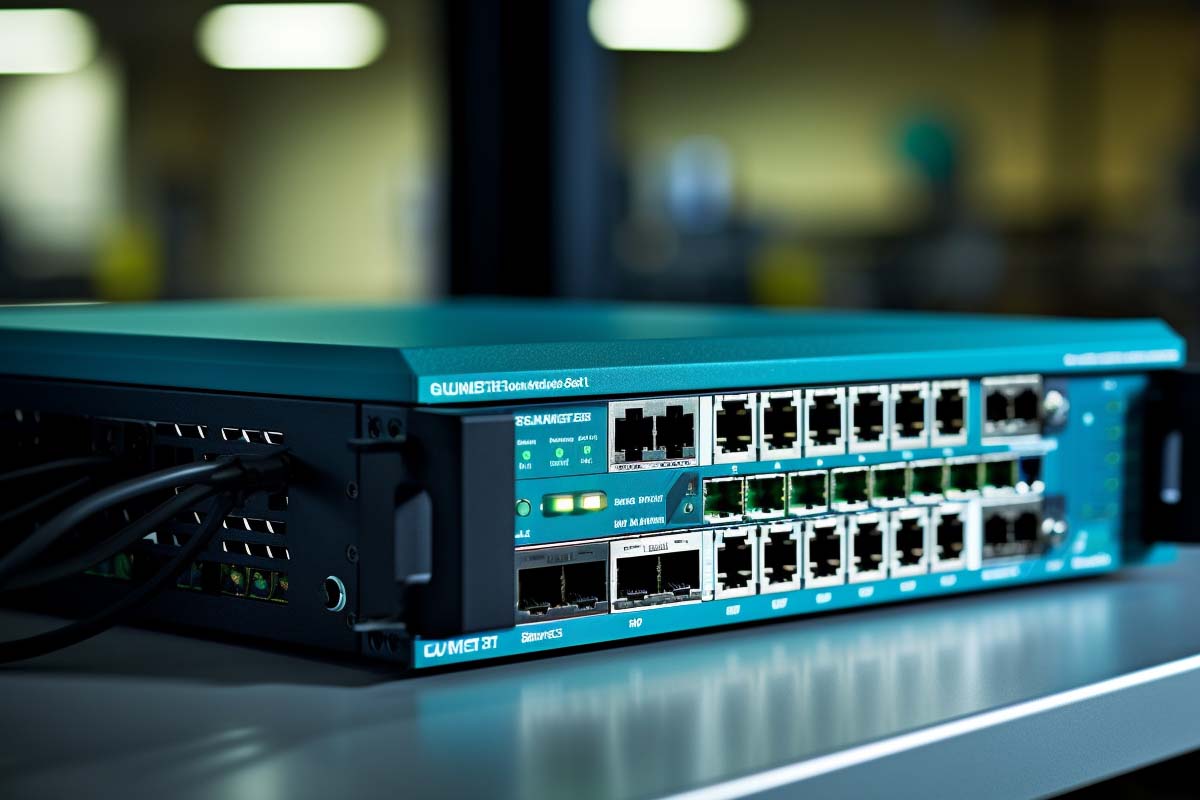
When users can’t reach a business app, a VPN tunnel drops, or a change to the perimeter firewall breaks something that used to work, Cisco ASA is often part of the story. Cisco ASA is a stateful firewall and VPN security platform that enforces traffic policy at the network edge, and it still shows up in legacy, branch, data center, and transition environments.
Cisco CCNA v1.1 (200-301)
Learn essential networking skills and gain hands-on experience in configuring, verifying, and troubleshooting real networks to advance your IT career.
Get this course on Udemy at the lowest price →Quick Answer
Cisco ASA is the Cisco Adaptive Security Appliance, a stateful firewall and VPN platform that controls traffic, terminates remote access and site-to-site tunnels, and enforces perimeter policy. As of July 2026, it remains relevant in legacy and transitional networks because it provides predictable session-aware enforcement, even though many organizations now layer it with newer identity, cloud, and monitoring controls.
Definition
Cisco ASA is the Cisco Adaptive Security Appliance, a security platform that combines firewall enforcement, remote access VPN, site-to-site VPN, and policy controls in one device. It is best understood as a traffic enforcement point that decides what connections are allowed, how they are translated, and how sessions are tracked.
| Product Name | Cisco Adaptive Security Appliance (ASA) as of July 2026 |
|---|---|
| Primary Role | Stateful firewall and VPN security platform as of July 2026 |
| Core Functions | Firewalling, VPN termination, access control, policy enforcement as of July 2026 |
| Best Fit | Legacy, branch, data center, and transition environments as of July 2026 |
| Key Strength | Predictable session-aware enforcement as of July 2026 |
| Common Challenge | NAT, routing, and policy interactions during troubleshooting as of July 2026 |
| Typical Use Case | Remote access and site-to-site VPN connectivity as of July 2026 |
What Cisco ASA Is and Why It Became a Standard in Enterprise Security
Cisco ASA became a standard because it gave network teams a single enforcement point for traffic filtering, VPN connectivity, and access control. That mattered when organizations wanted fewer devices to manage and fewer places where policy could drift.
The full name, Adaptive Security Appliance, reflects how ASA was positioned: not just as a packet blocker, but as a device that could inspect sessions and apply policy based on connection state. That is a major difference from a simple stateless filter, which only looks at one packet at a time.
Why enterprises adopted ASA so widely
Enterprises liked ASA for three practical reasons. First, it behaved predictably. Second, it brought multiple perimeter functions into one operating model. Third, it fit well into environments where uptime and consistency mattered more than chasing every new feature.
- Firewalling to allow or deny traffic based on policy
- VPN termination to secure user and site connectivity
- Access control to restrict who could reach what
- Policy enforcement to keep traffic aligned to business rules
That combination made ASA a common choice in environments built around centralized security at the edge. Cisco’s current security documentation still frames firewalling, VPN, and policy as core security functions, which is why ASA remains part of many operational designs even as organizations modernize around it. See Cisco’s official security and firewall resources at Cisco and Cisco Learning Network material for network security fundamentals.
ASA is not a complete security program. It is one enforcement layer in a broader architecture that also needs identity controls, endpoint protection, logging, and change management.
The Evolution of Cisco ASA From PIX Firewall to Modern Security Appliance
Cisco ASA grew out of the earlier Cisco PIX Firewall lineage, and that history explains a lot about its design and deployment patterns. The transition from PIX to ASA gave enterprises a more flexible security appliance without forcing them to redesign perimeter security from scratch.
PIX was widely used for basic firewall and VPN protection, but enterprise buyers wanted more operational flexibility. ASA expanded the model with richer policy handling, better integration options, and a more durable role in mixed network environments.
Why the transition mattered
The business value was straightforward: organizations could preserve familiar security workflows while gaining a platform that handled more than simple packet blocking. That reduced change risk, which is one reason long-lived ASA deployments are still common.
- PIX-era security established the expectation of dedicated perimeter enforcement.
- ASA expanded that approach into a more flexible appliance model.
- Legacy deployments continued because the policies, tunnels, and routing dependencies were already built around the device.
- Modern networks often keep ASA in place during gradual modernization rather than replace it in a single cutover.
Understanding that history helps when you inherit an environment that still depends on ASA. Legacy CLI habits, older NAT behavior, and long-standing VPN assumptions often make more sense once you know the platform evolved from a perimeter firewall era where stability mattered most. Cisco’s official networking and security documentation remains the best place to verify current platform behavior and supported workflows: Cisco.
How Does Cisco ASA Work as a Stateful Firewall?
Stateful inspection is the process of tracking a connection so the firewall knows whether traffic belongs to an established session or an unsolicited attempt. Cisco ASA uses that session awareness to make smarter allow-or-deny decisions than a stateless packet filter.
That matters because real traffic is not just isolated packets. A web session, VPN tunnel, or database connection depends on a sequence of packets that must be evaluated together. ASA keeps track of the session so return traffic can be allowed without opening the door to random inbound connections.
How the decision process works
- Traffic enters an interface and is matched against interface policy and access rules.
- ASA checks the session state to see whether the packet belongs to an existing connection.
- NAT is evaluated if address translation is required for the flow.
- Inspection and policy controls confirm whether the traffic fits the expected behavior.
- The connection table is updated so return packets can be recognized later.
This is why an ASA problem can look like “the firewall is blocking traffic” when the real issue is the path, translation, or session state. A misconfigured NAT rule can break a working app even when the access control list looks correct.
Pro Tip
When ASA traffic fails, check policy, NAT, and routing in that order. Many outages are caused by a rule that is technically present but functionally wrong because translation or route selection changes the actual path.
Cisco’s firewall behavior and packet-processing concepts are documented through its official support and configuration references at Cisco. For readers building networking fundamentals, this is the same logic reinforced in ITU Online IT Training’s Cisco CCNA v1.1 (200-301) path: understand the flow first, then troubleshoot the device.
Cisco ASA and VPN Connectivity for Remote Access and Site-to-Site Security
Cisco ASA is widely associated with VPN because secure tunnels were one of its strongest practical uses. Remote workers, contractors, branch offices, and partner networks all need controlled access, and ASA gave network teams a centralized place to enforce that access.
Remote access VPNs let users connect securely from home or while traveling. Site-to-site VPNs connect two networks, such as a branch office and a data center, over encrypted tunnels. In both cases, the ASA becomes the point where identity, encryption, and policy meet.
Why VPNs still matter on ASA
VPN issues often look like user problems, but they usually start with policy, authentication, or routing. If a tunnel fails to establish, the problem may be a certificate mismatch, identity failure, IKE negotiation issue, or split-tunnel route conflict rather than a simple “bad password.”
- Authentication failures when credentials, certificates, or identity policy do not align
- Tunnel negotiation issues when encryption settings or peers do not match
- Routing conflicts when a tunnel comes up but traffic still goes the wrong way
- Policy mismatches when access rules allow the VPN but deny the target resource
For official VPN guidance, Cisco’s documentation is the source of truth for ASA behavior. If you are troubleshooting a remote access issue, verify the tunnel path, user group policy, NAT exemptions, and route table before changing the firewall rule set. Cisco’s current VPN and security references are available through Cisco and the Cisco Learning Network.
VPN capability also explains why ASA remains relevant in transition environments. Many organizations still rely on it to support hybrid work and partner connectivity while they move toward newer access models.
What Are the Core Security Functions and Key Features of Cisco ASA?
Cisco ASA is useful because it combines several perimeter security functions without requiring separate devices for each one. That consolidation simplified operations for years, especially in organizations with small security teams or limited infrastructure staffing.
The key point is not that ASA replaces every other control. It is that ASA provides consistent enforcement at the edge, where traffic first crosses trust boundaries.
Core functions that made ASA practical
- Access control to allow or deny traffic by source, destination, protocol, or port
- Encryption for VPN sessions that protect traffic in transit
- Inspection to validate connection behavior and session state
- Logging to help teams verify what happened and why
- Segmentation to separate zones such as user, partner, server, or management traffic
Logging is especially important because troubleshooting on ASA usually depends on seeing the actual decision path. A rule that looks correct on paper may still fail because NAT changes the source address, or because a route sends the return traffic somewhere unexpected.
In a broader modern stack, ASA works best when paired with identity services, endpoint protection, and a SIEM. SIEM is a security platform that collects and analyzes log data from multiple sources so teams can spot patterns and investigate incidents faster. The concept is consistent with NIST guidance on layered security and visibility; see NIST for framework and control references.
Warning
Do not treat ASA as a substitute for endpoint security, identity governance, or monitoring. A strong perimeter does not compensate for weak authentication or unmanaged devices.
How Cisco ASA Fits in Modern Network Security Architectures
Cisco ASA still fits in a defense-in-depth strategy because many environments need a stable enforcement point at the edge even after they adopt cloud services, zero trust concepts, or software-defined access. It is most effective when it supports other controls instead of trying to stand alone.
That means ASA may sit alongside centralized logging, endpoint detection, identity-based access policies, and cloud security controls. In practice, the firewall remains valuable for enforcing what traffic is allowed between known network segments and across trusted tunnels.
Where ASA fits best today
ASA usually makes the most sense in environments with stable perimeter boundaries, established VPN workflows, or legacy systems that are expensive to rearchitect. It is also common where change control is strict and reliability matters more than adopting the newest feature set.
- Legacy networks that still depend on long-standing policy rules
- Branch offices that need predictable connectivity
- Data centers that segment internal services and partner access
- Transition architectures where organizations are modernizing gradually
NIST’s Cybersecurity Framework and related publications are useful references for thinking about where network enforcement, identity, and monitoring overlap. The framework is not ASA-specific, but it is a good way to understand why a firewall is only one control among many. See NIST Cybersecurity Framework.
The best ASA deployments align firewall policy with business workflow. If the rule set does not match how people actually work, the firewall becomes a source of outages instead of a control.
How Is Cisco ASA Different From Other Firewall Approaches?
Cisco ASA is different from older or simpler firewall approaches because it is session-aware and built for enterprise perimeter enforcement, not just packet filtering. That distinction matters when applications are stateful, users are mobile, and VPN access is part of daily operations.
Traditional firewalls that do less session-aware enforcement can still be useful, but they usually provide a narrower view of the connection. ASA’s behavior is more aligned with enterprise network operations, where a flow must be tracked from start to finish.
| ASA Strength | Predictable stateful enforcement and integrated VPN handling as of July 2026 |
|---|---|
| Newer Firewall Strength | Often stronger application visibility, threat intelligence, or cloud integration as of July 2026 |
Use-case fit matters more than feature count
Newer firewall platforms may be a better fit for cloud-heavy environments, advanced application control, or environments that require deeper telemetry. ASA may be a better fit where stability, familiar workflows, and existing skills are more valuable than the latest control plane features.
That is the real decision criterion. Teams usually choose based on operational risk, existing expertise, integration requirements, and how expensive replacement would be. Cisco, NIST, and vendor security guidance all point to the same principle: the right security control is the one your team can run correctly every day.
For readers mapping this against cloud and modern access models, compare ASA’s edge enforcement role with broader architecture guidance from Cisco and framework guidance from NIST.
Where Is Cisco ASA Still Found Today?
Cisco ASA is still found in places where organizations value stability, have long-lived policy dependencies, or have not completed a full perimeter redesign. That includes branch sites, data centers, legacy network segments, and transitional architectures where replacement would be risky or expensive.
Large enterprises rarely replace every firewall at once. They phase changes, preserve business continuity, and keep the old policy model running until the new one is proven. ASA often survives those transitions because it is already sitting in front of critical apps and remote access systems.
Common deployment models
- Legacy edge firewalls protecting older application networks
- Branch site devices supporting predictable access and VPN connectivity
- Data center perimeter controls for internal segmentation and partner access
- Hybrid environments where ASA coexists with newer security tools
These environments are not automatically outdated. Many are deliberately maintained because the business cost of migration is high. What changes is the operational model: documentation, change control, and periodic cleanup become more important as the environment ages.
When readers ask about asa cisco in real deployments, the answer is usually simple: it is still a live part of many enterprise networks, especially where a stable perimeter device is easier to maintain than a risky redesign.
What Are the Most Common Cisco ASA Troubleshooting Problems?
Cisco ASA troubleshooting usually comes down to one of four issues: policy, NAT, routing, or session handling. When users report blocked traffic or broken VPN access, the fastest path is to verify each layer in order rather than jump straight to the ACL.
A rule can be correct and still fail because the translated address is wrong or because the return path is asymmetric. That is why ASA troubleshooting rewards a methodical approach.
Step-by-step troubleshooting order
- Check the policy to confirm the traffic is explicitly allowed.
- Review NAT to verify addresses are translated as expected.
- Inspect routing to make sure the response traffic returns through the same path.
- Validate session state to confirm the connection is being tracked properly.
- Review logs to identify the actual drop reason instead of guessing.
Common symptoms include partial access, tunnel drops, authentication success with no data flow, and applications that work from one network but not another. These are often policy mismatch problems, not software failures.
One of the biggest operational lessons in ASA work is that troubleshooting exposes process weaknesses. If rule changes are not documented, if exceptions are left in place too long, or if VPN settings are copied without validation, the firewall will eventually show it.
For broader security operations, logging and change validation align with NIST control and monitoring practices. Official references from NIST and Cisco’s own documentation are the best places to confirm current behavior before making changes.
What Are the Advanced Cisco ASA Configuration Scenarios?
Cisco ASA can support advanced configurations such as multi-context deployments, complex segmentation, and integrated management workflows. Those scenarios show that ASA is more than a basic firewall, but they also raise the stakes for documentation and rollback planning.
Multi-context designs conceptually allow one physical firewall to behave like multiple logical firewalls. That can help when different business units, environments, or policy domains need separation without separate appliances for each one.
Why complexity increases risk
Advanced routing, NAT, and policy combinations make it easier to introduce a subtle error that affects multiple services at once. A bad change can break VPN access, internal app reachability, or partner connectivity in ways that are hard to unwind without good records.
- Multi-context segmentation for separating business units or environments
- Complex NAT design for overlapping address spaces or special app paths
- Policy coordination with other Cisco security tools or centralized workflows
- Rollback planning to recover quickly if a change causes an outage
Advanced ASA work demands the same discipline used in network engineering overall: test in a controlled way, document the expected traffic path, and verify the result before expanding the change. That approach maps well to the skills taught in Cisco CCNA v1.1 (200-301), especially traffic verification and troubleshooting fundamentals.
When readers search for asa block google or asa channel, they are often trying to understand how the platform behaves under real policy constraints. The answer is that advanced ASA configurations reward precision, not improvisation.
What Is the Real Business Value of Cisco ASA?
Cisco ASA creates business value by reducing uncertainty at the network edge. Predictable enforcement lowers the risk of accidental exposure, and secure VPN access keeps employees, contractors, and partners connected without opening the perimeter wider than necessary.
That reliability matters most when organizations run legacy applications, maintain strict change windows, or support distributed users who still rely on central access paths. In those cases, the firewall’s operational consistency is more valuable than a flashy feature list.
Business outcomes ASA supports
- Less downtime because traffic behavior is controlled and repeatable
- Safer remote work through centralized VPN policy
- Controlled partner access without broad network exposure
- Continuity for legacy apps that depend on stable network paths
Security tools are judged by how well they support operations. A firewall that is technically powerful but operationally confusing can create more outages than risk reduction. ASA’s long-standing value is that many teams know how to run it, troubleshoot it, and keep business traffic moving.
Operational security is not about having the most features. It is about enforcing the right controls consistently without interrupting the business.
How Should You Manage Cisco ASA in a Modern Environment?
Cisco ASA works best when it is managed like a living control, not a set-and-forget appliance. That means reviewing rules, validating VPN paths, watching logs, and removing old exceptions that no longer serve a business need.
Clean policy is the biggest quality-of-life improvement you can give yourself on ASA. Old rules accumulate quickly, and every stale exception increases the chance of confusion during an incident.
Practical management habits
- Document every change so you can explain why a rule exists.
- Review logs regularly to spot drops, anomalies, and unexpected traffic patterns.
- Test VPN access after identity, route, or policy updates.
- Check NAT behavior whenever app access breaks in one direction only.
- Remove stale rules that no longer support active systems.
Pairing ASA with identity services, endpoint protection, and centralized monitoring makes the perimeter more effective. That layered approach is also aligned with NIST guidance and with common enterprise operations practice.
Key Takeaway
Cisco ASA remains valuable because it enforces traffic policy, terminates VPNs, and provides predictable stateful inspection.
ASA works best in legacy, branch, data center, and transition environments where stability matters.
Most ASA problems come from policy, NAT, routing, or session-state errors rather than a single broken rule.
ASA should be treated as one layer in a broader security architecture, not as a complete security solution.
Cisco CCNA v1.1 (200-301)
Learn essential networking skills and gain hands-on experience in configuring, verifying, and troubleshooting real networks to advance your IT career.
Get this course on Udemy at the lowest price →Conclusion
Cisco ASA is a stateful firewall and VPN platform that still matters in many enterprise environments because it delivers predictable perimeter enforcement, secure remote connectivity, and stable policy control. It is especially common where legacy systems, long-lived VPNs, and careful change management still define the network.
The platform is strongest when you understand what it does well: track sessions, control access, terminate tunnels, and enforce traffic policy consistently. It is less relevant when an organization needs cloud-native controls or deep application intelligence that newer platforms may provide.
If you are working with ASA now, focus on rule clarity, NAT verification, VPN troubleshooting, and documentation discipline. If you are learning networking fundamentals, this is exactly the kind of platform that teaches why traffic flow, session state, and routing all matter.
To build that foundation, explore ITU Online IT Training’s Cisco CCNA v1.1 (200-301) course and pair it with Cisco’s official documentation and NIST guidance for a practical view of how perimeter security really works.
Cisco®, Adaptive Security Appliance, and related Cisco product names are trademarks of Cisco Systems, Inc.
